

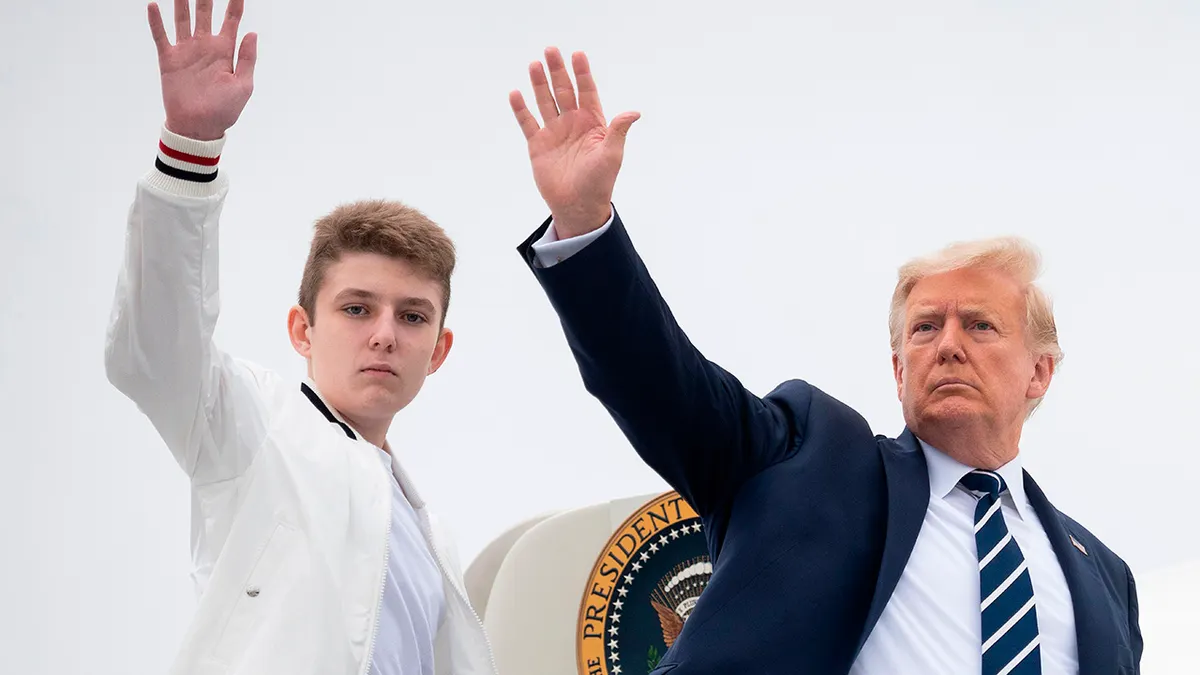
The internet has always been fascinated with the families of political leaders, especially the children of presidents. Over the years, one question that repeatedly appeared online was: “is barron trump autistic?” The discussion became widespread across social media platforms, blogs, YouTube videos, and online forums. Many people searched for answers after watching public appearances of Barron Trump during his father’s political campaigns and presidency.
However, despite years of speculation, there has never been any verified public statement confirming that Barron Trump is autistic. The rumors mostly came from internet assumptions, viral posts, and public misunderstanding of autism itself. In many ways, the debate says more about online culture and celebrity scrutiny than it does about Barron Trump personally.
This article explains why people began asking the question, how the rumors spread, why experts criticized the speculation, and why discussing someone’s medical condition without evidence can become problematic. It also explores how autism is often misunderstood online and why privacy matters, especially for children and teenagers connected to public figures.
How the “Is Barron Trump Autistic?” Rumor Started
The speculation surrounding Barron Trump began during the 2016 U.S. presidential campaign when he appeared publicly alongside his father, Donald Trump, and his mother, Melania Trump. At the time, Barron was still very young, and viewers started closely analyzing his body language, facial expressions, and behavior during public events.
Some internet users claimed that Barron appeared quiet, reserved, or less expressive than other children seen in political families. These observations quickly turned into online theories. Social media users began posting clips and screenshots while suggesting he might be autistic. Soon, videos discussing the topic spread across platforms like YouTube, TikTok, Reddit, and Twitter.
One major reason the rumor gained attention was because people often try to interpret public behavior without understanding the full context. Public appearances can be stressful for children, especially when millions of people are watching. A child appearing tired, shy, nervous, or uncomfortable in front of cameras does not indicate a medical diagnosis.
The rumor became even more visible after certain internet creators and commentators amplified it. Once a topic begins trending online, search engines notice increased interest, causing more people to click, search, and share. That cycle often transforms speculation into a viral discussion, even when no evidence exists.
Why People Associated Certain Behaviors With Autism
One reason people kept asking “is barron trump autistic” is because autism is often misunderstood by the public. Many individuals mistakenly believe that quiet behavior, limited facial expressions, or discomfort in crowds automatically indicate autism. In reality, autism spectrum disorder is far more complex and cannot be identified simply by watching brief public appearances.
Autism affects people differently. Some autistic individuals are highly social, while others may prefer quieter environments. Some communicate verbally with ease, while others experience communication challenges. There is no single “look” or behavior that defines autism.
Unfortunately, online discussions often oversimplify neurodevelopmental conditions. Viewers may see a child avoiding eye contact or standing silently during an event and immediately assume something medical is happening. Experts have repeatedly warned that diagnosing someone based on short video clips is inaccurate and harmful.
In Barron Trump’s case, most observations came from heavily edited television footage or short viral videos. These clips rarely show the full context of what was happening. Public events can last hours, involve intense security, loud crowds, bright lights, and media attention. Any child placed in such situations may appear uncomfortable or distracted.
The public tendency to overanalyze famous individuals is not new. Celebrities, politicians, athletes, and their families are constantly examined by internet users looking for hidden meanings in normal behavior. In Barron’s case, being the son of a president made him one of the most visible teenagers in America.
Public Reactions to the Autism Speculation
As the rumors spread online, reactions became divided. Some people believed the speculation was harmless discussion, while others strongly criticized it. Autism advocates and medical professionals argued that diagnosing someone without evidence was irresponsible and invasive.
Many critics pointed out that Barron Trump was a minor at the time. They argued that children of political figures deserve privacy, regardless of their parents’ political beliefs. Publicly debating whether a child has a developmental condition raised ethical concerns across media platforms.
Others emphasized that even if someone were autistic, it should never be treated as gossip or entertainment. Autism is a medical and neurological condition, not a scandal. Some autism advocacy groups noted that online speculation can unintentionally reinforce stereotypes by treating autism as something shocking or abnormal.
At the same time, some individuals defended the discussions by saying they were attempting to increase autism awareness. However, awareness without accuracy can create misinformation. Medical conditions should not be assigned to people based on assumptions, especially when the individual has not spoken publicly about the matter.
The situation demonstrated how quickly internet culture can blur the line between curiosity and invasion of privacy. Once rumors spread widely enough, they can follow a person for years, regardless of whether they are true.
The Role of Social Media in Spreading the Rumor
Social media played a massive role in turning the phrase “is barron trump autistic” into a highly searched keyword. Platforms reward emotional, controversial, and attention-grabbing content. Videos or posts making bold claims often receive more clicks, comments, and shares than careful or factual explanations.
Algorithms also contribute to the problem. If someone watches one video discussing Barron Trump and autism, recommendation systems may continue showing similar content. Over time, users can begin believing speculation is factual simply because they see it repeatedly online.
This phenomenon is known as the “illusion of truth” effect. Repeated exposure makes claims feel more believable, even without evidence. Viral content creators sometimes exploit this by posting dramatic titles or thumbnails designed to generate reactions.
Search engines also amplify trending topics. When thousands of people search the same phrase, autocomplete suggestions begin recommending it to others. As a result, people who never considered the question before may become curious simply because they saw it trending.
The Barron Trump rumor illustrates how internet culture can transform unsupported claims into long-lasting public narratives. Once information spreads online, correcting misinformation becomes difficult because emotional stories travel faster than factual explanations.
Why Medical Experts Warn Against Online Diagnosis
Medical professionals consistently discourage people from diagnosing others online. Autism spectrum disorder requires comprehensive evaluation by qualified specialists using detailed behavioral assessments, developmental history, and clinical observation.
A short public video cannot provide enough information for diagnosis. Experts must consider communication patterns, sensory responses, developmental milestones, social interaction history, and many other factors over time. Even trained professionals avoid making conclusions without direct evaluation.
Online diagnosis also creates broader social problems. It can spread misinformation about how autism actually presents in different individuals. Many autistic people do not match stereotypes commonly portrayed online or in media.
Another concern is stigma. When internet discussions treat autism like shocking gossip, it can reinforce harmful attitudes toward neurodivergent individuals. Advocacy groups have spent years encouraging society to view autism with understanding rather than judgment.
In addition, assigning medical labels without consent violates personal privacy. Public figures may lose some privacy due to their visibility, but children connected to politics or celebrity culture deserve protection from invasive speculation.
The debate surrounding Barron Trump became a major example of why internet diagnosis culture can become harmful. It highlighted how quickly assumptions can spread when millions of people participate in online discussions without verified information.
Barron Trump’s Private Life and Public Attention
Unlike many celebrity children, Barron Trump has generally maintained a relatively private public image. During Donald Trump’s presidency, Barron appeared less frequently in interviews and media appearances compared to other political family members.
His mother, Melania Trump, repeatedly emphasized her desire to protect her son’s privacy while he was growing up. She often limited his public exposure and avoided placing him heavily in political media campaigns.
Despite these efforts, public curiosity surrounding Barron remained extremely high. As the child of one of America’s most controversial and recognizable presidents, he naturally became a topic of interest online. Many people searched for information about his school life, personality, hobbies, height, and future plans.
The autism rumors added another layer of unwanted attention. Because Barron rarely addressed public speculation himself, internet conversations continued without direct clarification. This silence led some people to continue guessing, even though no evidence supported their assumptions.
In reality, many teenagers connected to political families struggle with public scrutiny. Growing up under constant observation can create enormous pressure. Every facial expression, movement, or appearance may become a viral discussion topic online.
Understanding Autism Beyond Internet Stereotypes
The conversation around “is barron trump autistic” also reveals how much misinformation still exists about autism spectrum disorder. Autism is not defined by one personality type or outward appearance. Every autistic individual experiences life differently.
Some autistic people are extremely outgoing, while others are more introverted. Some excel academically, creatively, or socially. Others may require significant support in communication or daily activities. Autism exists on a broad spectrum, meaning experiences vary greatly.
Modern understanding of autism has evolved significantly over the years. Experts increasingly recognize that many stereotypes shown in movies or online are outdated. Autism cannot be identified simply through shyness, posture, or isolated behaviors.
Public discussions often ignore the diversity within the autistic community. Instead, internet speculation tends to reduce autism to simplistic assumptions. This creates confusion both for neurotypical audiences and for autistic individuals themselves.
Awareness campaigns today focus more on acceptance, inclusion, and understanding rather than labeling people based on stereotypes. The Barron Trump debate became an example of how society still struggles with balancing curiosity, empathy, and factual understanding.
The Ethics of Speculating About Someone’s Health
One of the biggest questions raised by this topic is whether the public should speculate about someone’s medical or neurological condition at all. Ethics experts argue that guessing about another person’s health without evidence can become deeply invasive.
Even when the discussion seems harmless, it can affect real people emotionally and socially. Public speculation may create stress for individuals and families, especially when rumors spread globally through social media.
In Barron Trump’s case, critics argued that the speculation crossed personal boundaries because he was still a child during much of the discussion. Many believed political disagreements with his father should never justify targeting him online.
There is also the issue of permanence. Internet rumors rarely disappear completely. Years later, the same questions still appear in search engines because digital content remains searchable indefinitely.
At the same time, the discussion sparked important conversations about autism representation and stigma. Some people pointed out that if society reacts negatively to the possibility of autism, that reveals broader issues about acceptance and understanding.
Still, most experts agree that diagnosis should come from qualified professionals and personal disclosure — not public speculation.
Why the Search Term Remains Popular Today
Even years after the rumors first appeared, people continue searching “is barron trump autistic.” Several factors explain why the keyword remains highly popular online.
First, curiosity about political families never completely disappears. Barron Trump remains connected to major political events due to his father’s continued presence in American politics. Whenever the Trump family returns to headlines, interest in Barron increases again.
Second, viral internet rumors often develop long lifespans. Once a topic gains strong search traffic, websites continue publishing articles about it for clicks and engagement. This creates a cycle where older speculation remains visible to new audiences.
Third, many people search the term simply because they want clarification. Not every search reflects belief in the rumor. Some users genuinely want to know whether any confirmed information exists.
The continued popularity of the keyword also demonstrates how search behavior works online. Controversial questions tend to attract attention, especially when they involve famous individuals and unresolved public curiosity.
However, despite years of discussion, there is still no verified public evidence confirming claims that Barron Trump is autistic.
What We Can Learn From the Discussion
The broader lesson from the “is barron trump autistic” debate goes beyond one individual or family. It highlights how internet culture, social media algorithms, and public curiosity can combine to create massive speculation around private lives.
It also demonstrates the importance of media literacy. Seeing a claim repeated online does not make it true. Viral discussions should always be approached carefully, especially when they involve medical or personal subjects.
The conversation additionally reflects changing public attitudes toward autism. While awareness has improved significantly over the last decade, misconceptions and stereotypes still remain common online. Many experts believe society needs more education about neurodiversity and respectful communication.
Privacy is another major lesson. Children and teenagers connected to public figures often face intense scrutiny they never personally chose. Public interest should be balanced with empathy and ethical responsibility.
Finally, the discussion reminds people that autism should never be treated as an insult, scandal, or internet mystery. Autism is simply one form of neurodiversity experienced by millions worldwide.
Conclusion
The question “is barron trump autistic” became popular largely because of internet speculation, viral social media content, and public fascination with political families. However, there has never been verified evidence or an official public statement confirming such claims about Barron Trump.
The rumors spread mainly because viewers interpreted limited public appearances through stereotypes and assumptions about autism. Experts and advocacy groups repeatedly criticized the online diagnosis culture surrounding the topic, emphasizing that autism cannot be identified through short video clips or public behavior alone.
Beyond the rumors themselves, the discussion opened larger conversations about privacy, media ethics, misinformation, and autism awareness. It showed how quickly unsupported narratives can grow online and why responsible communication matters in the digital age.
As internet users become more aware of misinformation and privacy concerns, discussions like these serve as reminders to approach sensitive topics carefully, respectfully, and factually.