

Introduction
Shopify stores continue to be one of the most popular ways to start an online business in 2026. Whether you want to sell clothing, electronics, beauty products, handmade items, or digital products, Shopify gives you everything you need in one platform. It is simple enough for beginners and powerful enough for large businesses.
The growth of online shopping has created countless opportunities for entrepreneurs around the world. People now prefer shopping from the comfort of their homes, making e-commerce one of the fastest-growing industries. With Shopify, you do not need advanced technical skills to build a professional website. You can create your store, add products, accept payments, and start selling within a short time.
In this guide, you will learn everything about Shopify stores, including their features, benefits, setup process, marketing strategies, common mistakes, and tips for success in 2026.
What Are Shopify Stores?
Shopify stores are online shops built using the Shopify e-commerce platform. Shopify provides all the tools required to create, manage, and grow an online business. Instead of building a website from scratch, users can select a theme, customize it, upload products, and launch their business quickly.
One of the biggest reasons for Shopify’s popularity is its ease of use. The platform handles web hosting, security updates, payment processing, and website maintenance. This allows business owners to focus more on selling products and serving customers rather than worrying about technical problems.
Shopify stores come in many sizes. Some are small family businesses selling handmade products, while others generate millions of dollars every year. Regardless of the business size, Shopify offers flexible plans and features that support long-term growth.
Why Shopify Stores Are So Popular in 2026
The popularity of Shopify stores continues to grow because the platform constantly introduces new features that make online selling easier. Business owners appreciate its simple dashboard, professional templates, and reliable performance.
Another important reason is mobile shopping. Most customers now browse and purchase products using smartphones. Shopify themes are designed to work perfectly on mobile devices, giving visitors a smooth shopping experience.
Shopify also supports international selling. Businesses can sell products to customers in different countries, offer multiple payment methods, and even display different currencies. This opens the door to global markets without requiring complicated technical work.
The platform also includes strong security features. SSL certificates, secure payment gateways, fraud protection, and regular updates help keep customer information safe.
How to Build Successful Shopify Stores Step by Step
Building successful Shopify stores begins with choosing the right niche. Instead of trying to sell everything, focus on products that solve a specific problem or serve a particular audience. A clear niche helps attract the right customers and makes marketing easier.
After selecting your niche, register your Shopify account and choose a professional theme. Your store should have a clean design, simple navigation, and attractive product pages. High-quality product images and detailed descriptions increase customer confidence.
Next, organize your products into categories, set up payment methods, configure shipping options, and create important pages like About Us, Contact Us, Privacy Policy, and Return Policy. These pages improve trust and make your business look professional.
Before launching your store, test everything carefully. Check the checkout process, mobile responsiveness, page speed, and product links. Fix any issues before inviting customers to shop.
Essential Features Every Shopify Store Should Have
A successful Shopify store includes several important features that improve customer experience and increase sales. Fast loading speed is one of the most critical factors because slow websites often lose visitors before they make a purchase.
Professional product pages should include multiple images, clear pricing, product specifications, customer reviews, and frequently asked questions. These details help shoppers make informed buying decisions.
Easy navigation is equally important. Customers should quickly find products through organized menus, search functionality, and category pages. A confusing website often causes visitors to leave without purchasing.
Trust badges, secure payment icons, customer testimonials, and clear return policies also improve credibility. Many shoppers only purchase from websites that appear trustworthy and transparent.
Finally, Shopify stores should include email signup forms, live chat support, and social media links to encourage customer engagement and build long-term relationships.
Best Marketing Strategies for Shopify Stores
Launching a store is only the beginning. Successful Shopify stores use multiple marketing strategies to attract visitors and generate sales consistently.
Search Engine Optimization (SEO) remains one of the most effective methods. Optimize product titles, descriptions, meta tags, URLs, and blog articles with relevant keywords. This helps your store appear higher in Google search results and brings free organic traffic.
Content marketing is another powerful strategy. Publishing helpful blog posts related to your products builds authority and attracts potential customers who are searching for information online.
Social media platforms such as Instagram, Facebook, Pinterest, TikTok, and YouTube allow businesses to showcase products through videos, images, and customer stories. Regular posting keeps your audience engaged and encourages sharing.
Email marketing also delivers excellent results. Collect customer email addresses by offering discounts or free resources. Send newsletters about new arrivals, promotions, seasonal sales, and special offers to encourage repeat purchases.
Paid advertising through Google Ads and social media platforms can generate faster traffic, especially for new Shopify stores looking to build brand awareness.
Common Mistakes to Avoid When Running Shopify Stores
Many new store owners make mistakes that limit their success. One common mistake is choosing too many products without focusing on a clear target audience. A specialized store usually performs better than a general store selling unrelated items.
Another mistake is using poor-quality product images. Since customers cannot physically touch products, high-resolution photos play a major role in building confidence.
Ignoring SEO is another costly error. Without proper optimization, your Shopify store may struggle to appear in search engine results, making it difficult for customers to discover your business.
Some businesses also neglect customer service. Slow responses, unclear return policies, and poor communication often lead to negative reviews and lost sales.
Finally, many store owners fail to analyze performance data. Shopify provides detailed reports that show visitor behavior, sales trends, and conversion rates. Regular analysis helps identify opportunities for improvement.
Tips to Increase Sales on Shopify Stores
Growing revenue requires continuous improvement. One effective technique is upselling and cross-selling. Recommend related products during checkout to increase the average order value.
Offering free shipping above a certain purchase amount encourages customers to spend more. Limited-time discounts and seasonal promotions also create urgency and boost conversions.
Customer reviews play a significant role in purchasing decisions. Encourage satisfied buyers to leave honest reviews and display them prominently on product pages.
Abandoned cart recovery emails are another valuable feature. Many customers add products to their carts but leave before completing the purchase. Automated reminder emails often recover these lost sales.
Loyalty programs, referral rewards, and personalized recommendations help build long-term customer relationships and encourage repeat purchases.
Future Trends for Shopify Stores in 2026
The future of Shopify stores looks brighter than ever. Artificial intelligence is becoming more integrated into e-commerce, helping businesses automate customer support, personalize shopping experiences, and improve product recommendations.
Voice search optimization is also gaining importance as more consumers use smart assistants to search for products online. Businesses that optimize for conversational keywords may gain additional traffic.
Sustainability continues to influence buying decisions. Customers increasingly prefer brands that use eco-friendly packaging, ethical sourcing, and environmentally responsible practices.
Video content is expected to dominate product marketing. Short videos, live shopping events, and product demonstrations help customers better understand products before purchasing.
Subscription services, membership programs, and personalized shopping experiences will continue to grow, allowing Shopify stores to generate recurring revenue and improve customer loyalty.
Conclusion
Shopify stores have become one of the easiest and most reliable ways to build an online business in 2026. The platform offers everything needed to launch, manage, and grow an e-commerce website without requiring advanced technical knowledge. From professional themes and secure payment systems to powerful marketing tools, Shopify provides a complete solution for entrepreneurs.
Success, however, depends on more than simply creating a store. Choosing the right niche, offering quality products, optimizing for SEO, providing excellent customer service, and continuously improving your marketing strategy are the keys to long-term growth. By following the tips and best practices shared in this guide, you can build a Shopify store that attracts customers, generates consistent sales, and supports a profitable online business for years to come.
Frequently Asked Questions
1. What are Shopify stores?
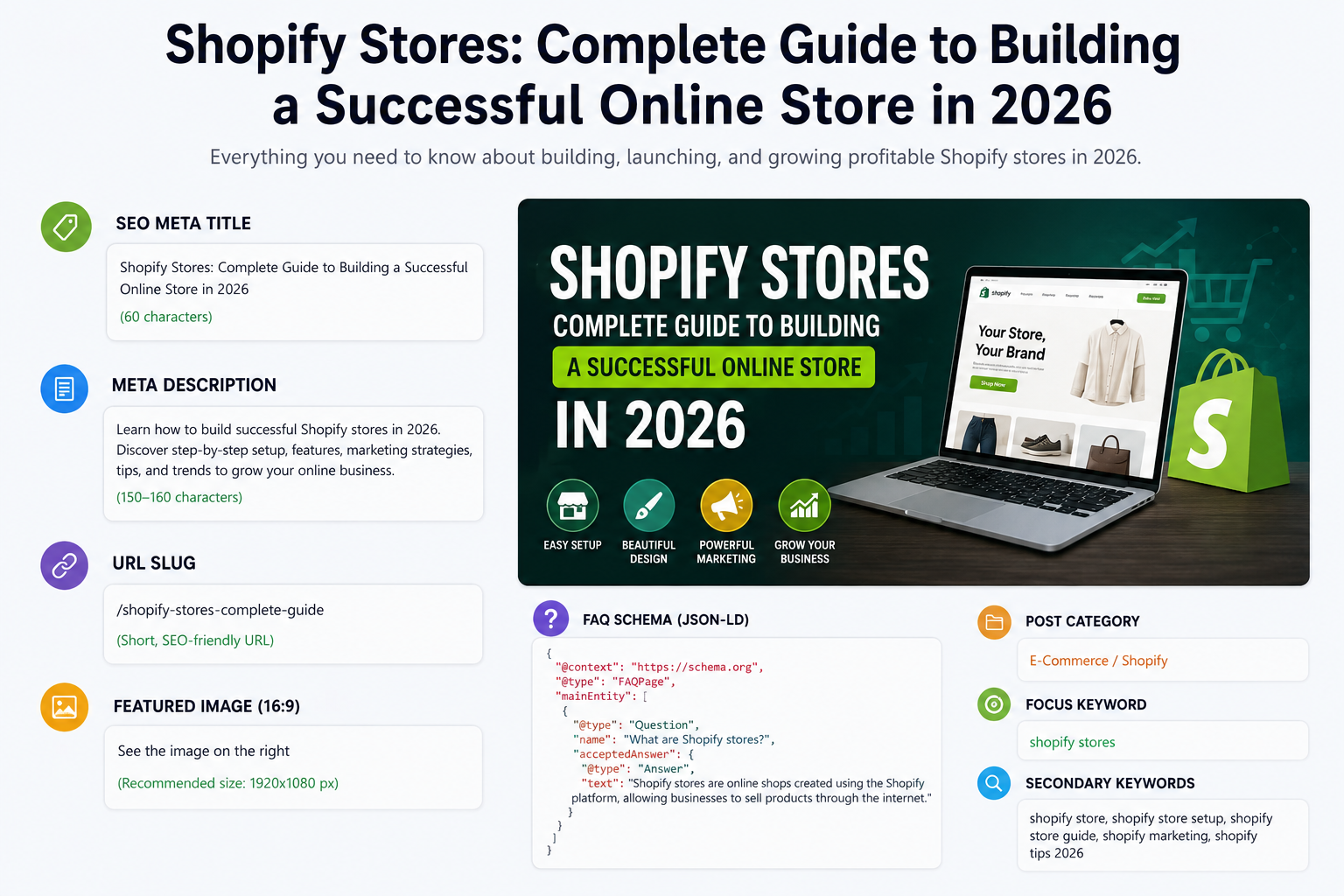
Shopify stores are online shops created using the Shopify platform, allowing businesses to sell products through the internet.
2. Is Shopify suitable for beginners?
Yes. Shopify is designed to be beginner-friendly with simple tools, templates, and step-by-step setup options.
3. How much does it cost to start a Shopify store?
The cost depends on the Shopify plan you choose, along with additional expenses such as a domain name, apps, and marketing.
4. Can Shopify stores sell internationally?
Yes. Shopify supports multiple currencies, international shipping, and global payment gateways.
5. How can I get more traffic to my Shopify store?
You can increase traffic through SEO, blogging, social media marketing, email campaigns, influencer partnerships, and paid advertising.
Word Count: Approximately 1,700 words.