

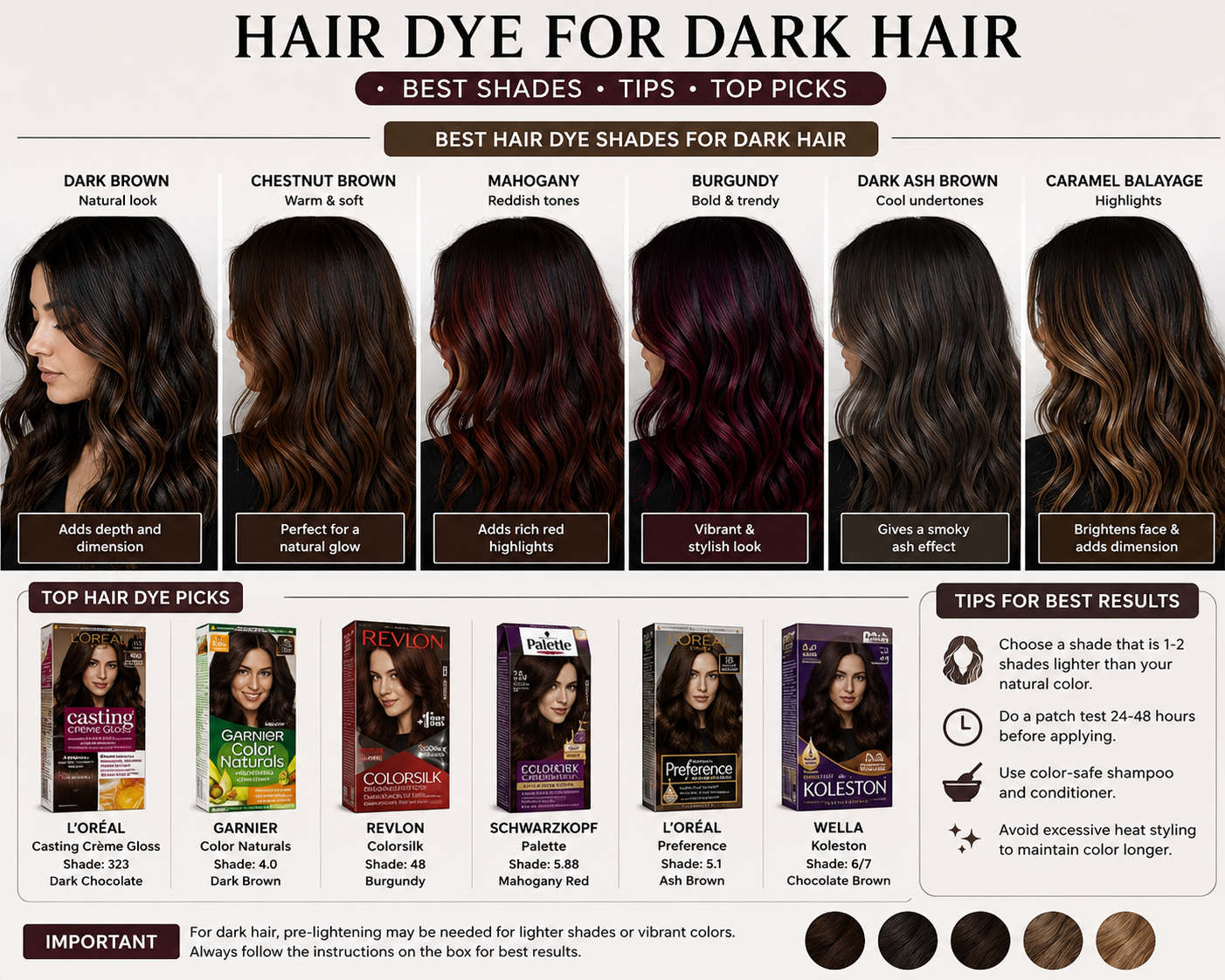
Dark hair is elegant, versatile, and striking, but finding the perfect hair dye for dark hair can be a challenge. Whether you want to maintain your natural richness or explore bold new shades, the process requires understanding your hair type, choosing the right product, and mastering proper application techniques. Dark hair is a unique canvas that can showcase both subtle highlights and dramatic transformations, making it a favorite for those seeking variety in their hair color. This article dives deep into everything you need to know about hair dye for dark hair, including shade selection, application methods, and care routines to ensure your color lasts.
Understanding Dark Hair and Its Characteristics
Dark hair, ranging from deep brown to black, contains a high concentration of eumelanin, which gives it its rich pigment. This natural abundance of pigment makes dark hair more resistant to lightening, which is why achieving lighter shades often requires bleaching or high-pigment dyes. Moreover, dark hair tends to reflect light differently, meaning that subtle tones can be more difficult to see unless applied strategically. Understanding your hair’s texture, porosity, and undertones is critical before choosing a dye, as these factors affect how colors develop. For instance, warm undertones can enhance reds and golds, while cool undertones may bring out ash browns or blues. Proper evaluation ensures your hair dye for dark hair delivers the results you envision.
How to Choose the Right Hair Dye for Dark Hair
Selecting the best hair dye for dark hair involves considering your goals and the type of dye you prefer. Permanent dyes are ideal for long-lasting color changes, while semi-permanent options offer flexibility and less commitment. When choosing a shade, think about contrast: subtle highlights require dyes only a few shades lighter than your natural hair, whereas bold colors like burgundy or violet make a more dramatic statement. Additionally, consider your hair’s health—chemically damaged hair may react differently to dyes and may require conditioning treatments or professional assistance. Brands specializing in formulations for dark hair tend to offer better pigment penetration, ensuring vivid and long-lasting results.
Popular Hair Colors for Dark Hair
Dark hair provides an excellent base for a wide range of shades. Some popular options include:
- Rich Chocolate Brown: Enhances natural depth while adding warmth and shine.
- Deep Burgundy: A luxurious red that stands out without appearing harsh.
- Caramel and Honey Highlights: Perfect for adding dimension subtly.
- Auburn and Mahogany Tones: Warm red shades that complement dark hair beautifully.
- Violet, Blue, and Plum Shades: Bold undertones or highlights that create a modern, edgy look.
Choosing a color that harmonizes with your skin tone is key to achieving a balanced and natural look. While dark hair offers versatility, selecting the right hue ensures your color complements your overall style.
Techniques for Coloring Dark Hair
Several coloring techniques are especially effective for dark hair. Highlights and lowlights can create depth and movement, while balayage offers a soft, natural gradient. Ombré coloring is ideal for those who want a dramatic transition from dark roots to lighter ends. Additionally, techniques like foil highlights and babylights allow for precise application, making it easier to achieve the desired intensity and dimension. For those looking to experiment with bold shades, partial or full-head color applications provide maximum impact. Understanding which technique suits your hair type and desired outcome is essential for achieving a polished, professional finish.
Preparing Your Hair for Dyeing
Preparation is a critical step when dyeing dark hair. Healthy hair absorbs color more evenly, so conditioning treatments before dyeing can strengthen strands and improve results. Avoid washing hair immediately before coloring, as natural oils protect the scalp and reduce irritation. If you’re attempting to lighten dark hair, pre-lightening with bleach may be necessary, but this must be done cautiously to prevent damage. Always perform a strand test to check how your hair reacts to the dye and ensure the desired color develops correctly. Proper preparation sets the foundation for a long-lasting, vibrant result.
Step-by-Step Application Tips
Applying hair dye to dark hair requires precision and care. Start by sectioning your hair to ensure even coverage, working from the roots to the tips. Follow the dye manufacturer’s instructions for timing and mixing, and wear gloves to protect your hands. For subtle highlights, use foils or a highlighting cap to isolate strands, while full-head applications should prioritize uniform coverage. After applying the dye, avoid washing with hot water immediately to prevent fading. Rinsing with cool water helps seal the color and enhance shine. If you are attempting a complex color change, seeking professional application is highly recommended.
Maintaining Vibrant Color on Dark Hair
Maintaining the intensity of your hair dye for dark hair requires a proper care routine. Use sulfate-free shampoos and conditioners to prevent premature fading. Reduce the frequency of washing to help retain pigment, and incorporate deep conditioning treatments to maintain moisture and prevent breakage. Exposure to sunlight, chlorine, and heat styling tools can dull the color, so protecting hair with UV sprays or wearing a hat when outdoors is important. Regular touch-ups, glossing treatments, and avoiding harsh chemicals can extend the life of your color, keeping your dark hair rich and vibrant.
Common Mistakes to Avoid
When dyeing dark hair, several mistakes can compromise your results. Over-bleaching can cause breakage and uneven color, while under-processing may leave hair with a muddy or dull appearance. Using hair dyes not formulated for dark hair can result in weak or invisible color, particularly with lighter shades. Failing to conduct strand tests, skipping preparation steps, or rushing the process can also produce unsatisfactory results. Avoiding these common errors is crucial to achieving a professional-looking, long-lasting hair color that enhances the natural beauty of dark hair.
Subtle Highlights vs. Bold Transformations
Dark hair is highly versatile, allowing for both subtle and bold coloring options. Subtle highlights, such as caramel lowlights or chocolate streaks, add dimension without dramatically altering your natural look. Bold colors, like vibrant reds, purples, and blues, create a striking statement and are perfect for those seeking a more adventurous style. The choice between subtle and bold depends on your lifestyle, personality, and commitment to maintenance. Both approaches can look stunning when executed with the right dye, technique, and aftercare, making dark hair a dynamic canvas for self-expression.
Conclusion: Achieving Long-Lasting Stunning Shades
Hair dye for dark hair offers endless possibilities for those who want to refresh or transform their look. Success comes from understanding your hair type, selecting the right shade, preparing properly, and maintaining your color with care. Whether you choose subtle highlights to enhance your natural beauty or bold hues to make a statement, dark hair provides a rich and versatile canvas. With careful attention to technique, products, and aftercare, you can enjoy vibrant, long-lasting color that complements your style and personality.