

Introduction
Health insurance has become an essential part of modern life. With rising healthcare costs, having access to an affordable and reliable healthcare network can make a huge difference in both financial security and peace of mind. Among the many healthcare networks available in the United States, PHCS health insurance is a name that many people encounter when enrolling in employer-sponsored plans or purchasing private coverage.
However, there is often confusion about what PHCS actually is. Is it an insurance company? Does it provide health plans directly? What benefits does it offer? And how do claims work?
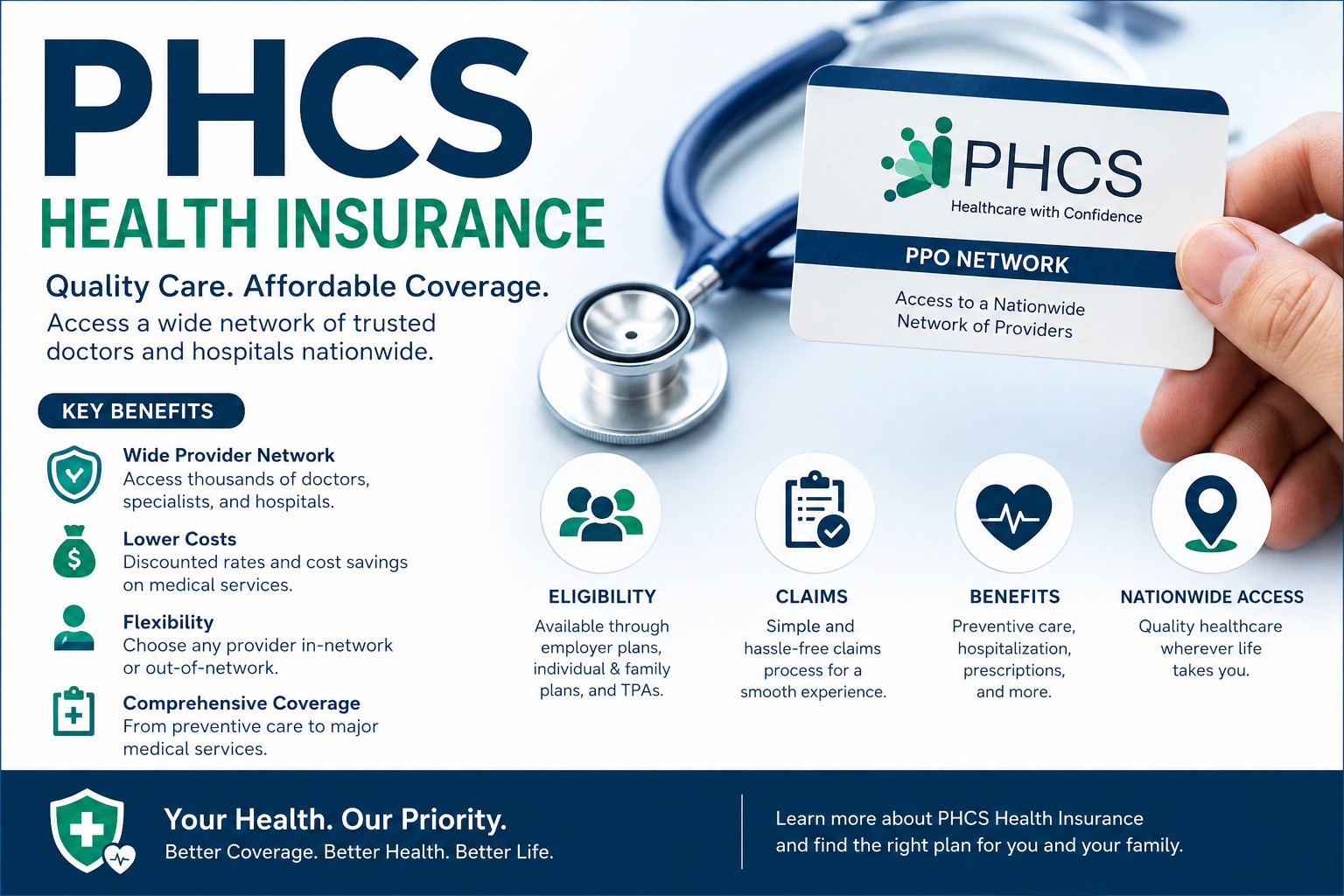
The truth is that PHCS, which stands for Private Healthcare Systems, is one of the largest Preferred Provider Organization (PPO) networks in the United States. Instead of selling insurance policies directly, PHCS works with insurance companies, employers, and third-party administrators to provide members access to a wide network of healthcare providers at discounted rates.
If you have PHCS on your insurance card or are considering a plan that uses the PHCS network, understanding how it works can help you make smarter healthcare decisions. This guide explains everything about PHCS health insurance, including eligibility requirements, claims, benefits, provider networks, and tips to maximize your coverage.
What Is PHCS Health Insurance?
PHCS Health Insurance refers to health plans that use the PHCS provider network. PHCS itself is not an insurance company. Rather, it is a healthcare network that connects insurance companies and employers with hospitals, doctors, clinics, and healthcare facilities that agree to offer services at negotiated prices.
The PHCS network is part of MultiPlan, one of the largest healthcare cost-management organizations in the United States. Through this partnership, PHCS members can access thousands of healthcare providers nationwide.
When you visit an in-network provider, the healthcare provider agrees to accept reduced fees negotiated by PHCS. As a result, members pay lower out-of-pocket costs compared to visiting providers outside the network.
One of the biggest reasons for PHCS’s popularity is flexibility. Unlike some restrictive healthcare plans, PHCS PPO networks often allow patients to visit specialists without obtaining referrals. Members also have the freedom to choose healthcare providers that best suit their needs.
Because PHCS has a nationwide reach, people who travel frequently or move between states can continue receiving care from participating providers without significant disruption.
How Does PHCS Health Insurance Work?
PHCS operates using the PPO model, which stands for Preferred Provider Organization. The system is designed to give patients greater flexibility while encouraging them to use healthcare providers that are part of the PHCS network.
When you enroll in a health plan that uses PHCS, you receive an insurance card that may display the PHCS or MultiPlan logo. This card allows you to access participating providers who have agreements with the network.
The process generally works as follows:
- You enroll in a health insurance plan that uses the PHCS network.
- You search for doctors or hospitals within the network.
- You schedule appointments with participating providers.
- The provider bills your insurance company directly.
- Negotiated rates reduce the overall cost of healthcare services.
- You pay only the deductible, copayment, or coinsurance specified by your plan.
You can also visit out-of-network providers, but doing so may result in higher costs. This flexibility is one of the reasons why PPO networks like PHCS are attractive to many individuals and families.
Eligibility Requirements for PHCS Health Insurance
Eligibility for PHCS health insurance depends on the specific insurance plan or employer that uses the PHCS network. Since PHCS itself does not sell insurance directly, the eligibility rules vary from one provider to another.
Employer-Sponsored Plans
Many employers offer healthcare plans that include the PHCS network. Employees may become eligible if they:
- Work full-time or meet minimum hour requirements.
- Complete an employer waiting period.
- Enroll during open enrollment periods.
- Meet dependent eligibility requirements for spouses and children.
Individual and Family Plans
Some insurance carriers use the PHCS network for their individual and family health plans. Eligibility may require:
- Legal residency within service areas.
- Proof of identity.
- Timely enrollment.
- Payment of monthly premiums.
Self-Funded Employer Plans
Large employers often operate self-funded health plans administered by third-party companies. These plans commonly use the PHCS network, allowing employees access to discounted healthcare services.
Eligibility rules vary, so reviewing your policy documents or contacting your plan administrator is important.
Major Benefits of PHCS Health Insurance
One of the biggest reasons people choose plans that use the PHCS network is the wide range of benefits they offer.
Large Provider Network
PHCS has one of the largest PPO networks in the United States. Members can access:
- Primary care physicians
- Specialists
- Hospitals
- Urgent care centers
- Diagnostic laboratories
- Imaging facilities
- Behavioral health professionals
This extensive network makes it easier to find healthcare providers close to home or while traveling.
Lower Healthcare Costs
PHCS negotiates discounted rates with participating providers. These negotiated fees often reduce:
- Doctor visit costs
- Hospital expenses
- Surgical fees
- Laboratory charges
- Imaging costs
As a result, members usually pay less when staying within the network.
Freedom to Choose Providers
Unlike HMOs, PHCS PPO plans often allow members to:
- Visit specialists without referrals.
- Change doctors when needed.
- Seek care outside the network.
- Receive treatment while traveling.
This flexibility gives patients more control over their healthcare decisions.
Nationwide Coverage
PHCS providers are available across many states, making healthcare accessible for:
- Frequent travelers
- Students studying away from home
- Families living in multiple locations
- People who relocate frequently
This nationwide presence is one of the network’s strongest advantages.
PHCS Provider Network Explained
The provider network is the heart of PHCS health insurance. Understanding how it works can help you save money and avoid unexpected medical bills.
In-Network Providers
In-network providers have agreements with PHCS to offer healthcare services at discounted rates.
Benefits of using in-network providers include:
- Lower copayments
- Reduced deductibles
- Lower coinsurance
- Simplified billing
- Fewer surprise charges
Most members prefer in-network providers because they maximize insurance benefits.
Out-of-Network Providers
You may still receive care from providers outside the PHCS network. However, this often results in:
- Higher deductibles
- Increased coinsurance
- Greater out-of-pocket expenses
- Possible balance billing
- Additional paperwork
Whenever possible, verify whether a provider participates in the PHCS network before receiving treatment.
Understanding the PHCS Claims Process
The claims process determines how healthcare providers and insurance companies handle medical expenses after treatment.
Step 1: Receive Medical Care
First, you obtain healthcare services from a participating provider.
In most cases, in-network providers submit claims directly to the insurance company.
Step 2: Claim Submission
If a provider does not submit claims automatically, you may need to submit:
- Claim forms
- Medical bills
- Receipts
- Physician reports
- Insurance details
Ensuring accurate information can prevent delays.
Step 3: Claim Review
The insurance company reviews:
- Covered services
- Eligibility status
- Medical necessity
- Deductibles
- Copayments
- Coinsurance requirements
After reviewing the claim, the insurer determines how much it will pay.
Step 4: Explanation of Benefits
You will receive an Explanation of Benefits (EOB), which summarizes:
- Total charges
- Covered amounts
- Insurance payments
- Remaining patient responsibility
Always review your EOB carefully to ensure accuracy.
Services Covered Under PHCS Health Insurance
Coverage varies depending on the insurance plan, but many PHCS-based plans cover a broad range of healthcare services.
Preventive Care
Preventive services may include:
- Annual physical exams
- Vaccinations
- Blood pressure screenings
- Cholesterol tests
- Cancer screenings
- Wellness visits
Preventive care helps identify health issues before they become serious.
Doctor and Specialist Visits
Most plans cover:
- Primary care visits
- Specialist consultations
- Follow-up appointments
- Chronic disease management
- Diagnostic evaluations
Coverage levels depend on your plan and whether providers are in-network.
Hospital Services
Hospital benefits may include:
- Emergency room visits
- Inpatient care
- Surgical procedures
- Intensive care
- Rehabilitation services
Hospital expenses can be significant, making network discounts particularly valuable.
Prescription Drugs
Many plans also include prescription drug coverage for:
- Generic medications
- Brand-name drugs
- Specialty medications
- Maintenance prescriptions
Review your plan’s formulary to understand which medications are covered.
Advantages and Disadvantages of PHCS Health Insurance
Like any healthcare network, PHCS has both strengths and limitations.
Advantages
- Large nationwide provider network
- Lower healthcare costs through negotiated rates
- Freedom to choose doctors and specialists
- No referrals required in many plans
- Convenient healthcare access while traveling
Disadvantages
- Coverage varies depending on the insurance company.
- Out-of-network care can be expensive.
- Provider participation may change over time.
- Plan structures can sometimes be confusing.
Despite these drawbacks, many people find PHCS to be a practical and flexible healthcare solution.
Tips to Maximize Your PHCS Benefits
To get the most from your PHCS health insurance:
- Always use in-network providers when possible.
- Review your plan’s deductible and copayment requirements.
- Take advantage of preventive care services.
- Keep copies of medical bills and EOB statements.
- Verify provider participation before appointments.
- Contact customer service if you have questions about claims or coverage.
These simple steps can save money and reduce unexpected healthcare expenses.
Conclusion
PHCS health insurance is not an insurance company itself but one of the largest PPO healthcare networks in the United States. Through partnerships with insurers, employers, and third-party administrators, PHCS provides millions of people access to affordable healthcare services across a broad network of doctors and hospitals.
Its major advantages include flexibility, nationwide coverage, lower healthcare costs, and the freedom to choose providers without needing referrals in many cases. While benefits and coverage vary depending on the insurance plan, understanding how PHCS works can help you make informed healthcare decisions and maximize your insurance benefits.
Whether you are enrolled in an employer-sponsored plan or considering a policy that uses the PHCS network, taking time to understand eligibility requirements, claims procedures, and provider options can help you get the best value from your healthcare coverage.