

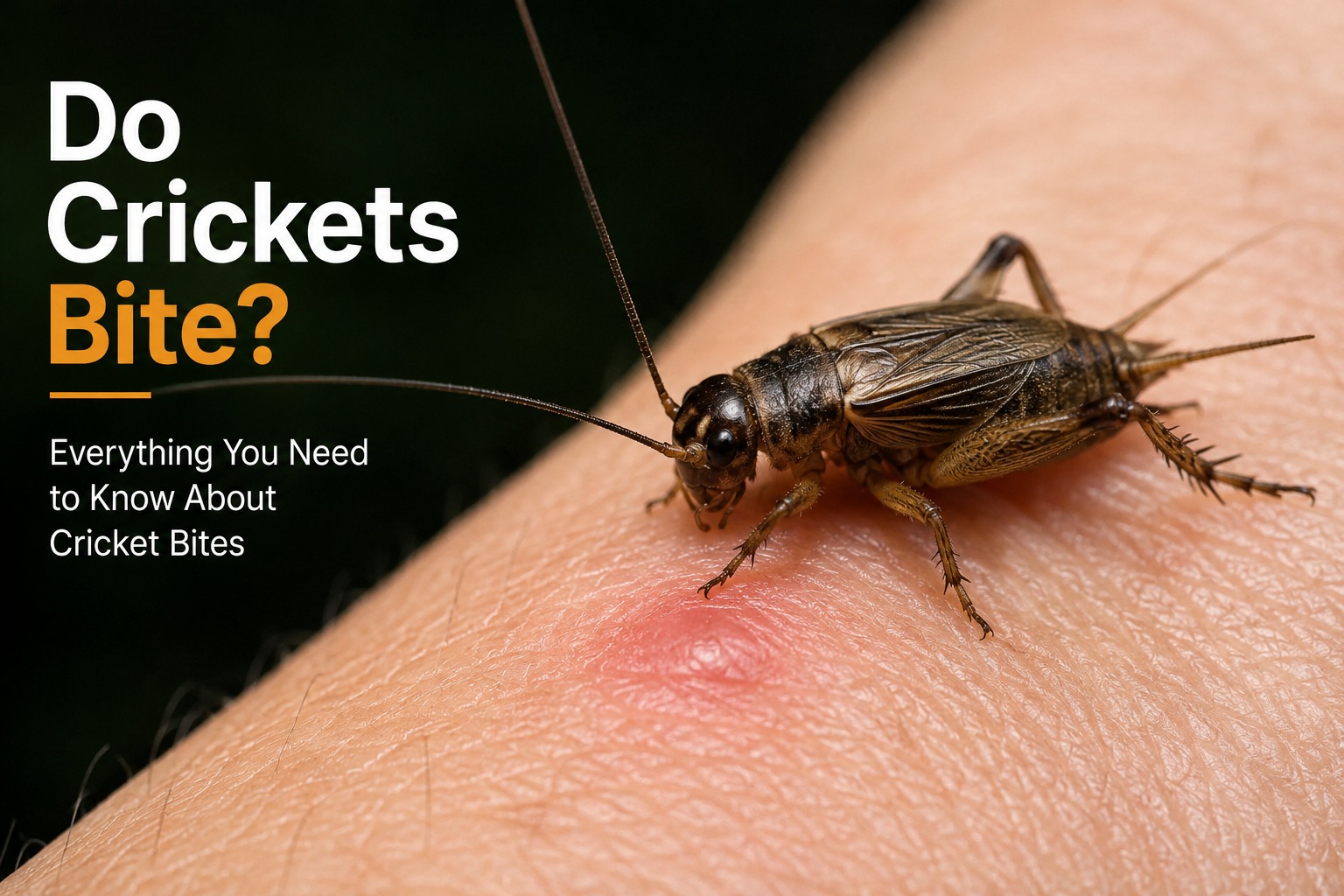
Crickets are among the most recognizable insects in the world. Their chirping sounds are often associated with peaceful summer nights, gardens, and countryside landscapes. However, many people who encounter crickets indoors or outdoors often wonder: do crickets bite? It is a common question, especially for homeowners who discover these insects in basements, garages, or near windows.
The short answer is yes, crickets can bite, but it is extremely uncommon and usually harmless. Most crickets are not aggressive toward humans and prefer to avoid contact whenever possible. Their mouthparts are designed primarily for chewing plant material and organic matter rather than attacking people. Nevertheless, under certain circumstances, crickets may nip or bite if they feel threatened or are handled roughly.
This article explores everything you need to know about cricket bites, including why crickets bite, whether their bites are dangerous, how to identify them, and the best ways to prevent cricket encounters.
What Are Crickets?
Crickets belong to the insect order Orthoptera, the same group that includes grasshoppers and katydids. There are more than 2,000 species of crickets worldwide, although only a handful are commonly found near homes and gardens. The most familiar species include house crickets, field crickets, camel crickets, and cave crickets.
These insects are usually brown, black, or tan and possess long antennae and powerful hind legs that allow them to jump impressive distances. Crickets are mostly nocturnal, becoming active after sunset when temperatures are cooler. Their characteristic chirping sound is produced by male crickets rubbing their wings together to attract females.
Crickets are omnivores and feed on plants, fungi, decaying matter, and even smaller insects. While they are generally harmless, large infestations can become a nuisance because they may damage fabrics, paper products, or houseplants.
Do Crickets Bite Humans?
One of the most common concerns people have is whether crickets bite humans. The answer is yes, but cricket bites are rare and usually occur only when the insect feels threatened or trapped.
Crickets possess mandibles, which are strong jaw-like mouthparts used for chewing food. These mandibles are capable of pinching human skin. However, unlike mosquitoes or fleas, crickets do not bite to feed on blood. They have no interest in human blood and do not actively seek people as a food source.
If you pick up a cricket or accidentally squeeze one, it may respond defensively by biting. The bite often feels like a small pinch rather than a painful sting. Most people experience little to no discomfort, and any irritation disappears quickly.
Therefore, when asking “do crickets bite,” it is important to understand that while they are physically capable of biting, they rarely do so and are not considered dangerous insects.
Why Do Crickets Bite?
Crickets do not bite out of aggression. Their behavior is primarily defensive, and bites occur only in specific situations.
The most common reason a cricket bites is self-defense. If a person attempts to catch or hold a cricket, the insect may perceive the interaction as a threat and use its mandibles to protect itself. Similarly, if a cricket becomes trapped inside clothing or under an object, it may bite while trying to escape.
Another reason involves curiosity. Crickets are known to nibble on various materials to determine whether they are edible. Occasionally, a cricket may lightly nibble exposed skin, especially if it detects sweat or salt residues. This behavior is not an actual attack and rarely causes discomfort.
In some cases, crickets kept as pets or feeder insects may become accustomed to human interaction. Even then, bites remain uncommon and are generally harmless.
Understanding why crickets bite helps dispel the misconception that they are aggressive insects. In reality, they prefer escaping danger over confronting it.
Are Cricket Bites Dangerous?
For most people, cricket bites are not dangerous at all. The bite usually results in a mild pinching sensation and may leave a tiny red mark that fades within a few hours.
Crickets are not venomous, which means they do not inject toxins or poison when they bite. Unlike spiders, bees, or wasps, crickets lack venom glands and stingers. Therefore, there is no risk of venom-related complications from a cricket bite.
Additionally, crickets are not known to spread diseases to humans through biting. They do not transmit illnesses such as malaria, Lyme disease, or dengue fever. This makes them significantly less concerning than mosquitoes or ticks.
However, there are a few exceptions. People with highly sensitive skin may experience slight redness, swelling, or itching around the bite area. In extremely rare cases, scratching the bite excessively can lead to minor skin irritation or infection.
Overall, cricket bites are considered harmless, and medical treatment is rarely necessary.
What Does a Cricket Bite Look Like?
Because cricket bites are so uncommon, many people are unsure how to identify one. In most cases, a cricket bite appears as a tiny red spot or small area of mild irritation.
The symptoms of a cricket bite may include:
- Slight redness around the affected area
- Mild itching or irritation
- A tiny puncture mark
- Temporary discomfort or pinching sensation
- Minor swelling in sensitive individuals
Unlike mosquito bites, cricket bites generally do not produce raised, itchy welts. They are also much smaller and less noticeable than spider bites.
The appearance of the bite depends on the individual’s skin sensitivity and the size of the cricket involved. Most signs disappear within a few hours to a day without treatment.
If redness spreads significantly, severe swelling occurs, or the area becomes painful, the symptoms may be caused by another insect rather than a cricket.
Which Types of Crickets Are Most Likely to Bite?
Not all cricket species behave the same way. Some are more likely to bite than others, although all cricket bites remain relatively rare.
House Crickets
House crickets are among the most common indoor species. They are light brown and thrive in warm environments. House crickets may occasionally bite if handled, but they are generally timid and avoid humans.
Field Crickets
Field crickets are black or dark brown and commonly live in lawns and gardens. Because they are larger and possess stronger mandibles, they are slightly more capable of biting. However, they still prefer fleeing from danger.
Camel Crickets
Camel crickets, also known as cave crickets, have a humpbacked appearance and long legs. These insects are common in damp basements and crawl spaces. Camel crickets are not aggressive and rarely bite humans.
Mole Crickets
Mole crickets spend most of their lives underground. Their large front legs are designed for digging rather than attacking. Bites from mole crickets are extremely uncommon.
Although different species vary in size and behavior, the risk of being bitten remains very low regardless of the type of cricket you encounter.
Do Crickets Bite Pets?
Pet owners often wonder whether crickets pose a threat to dogs, cats, birds, or reptiles. Fortunately, crickets are generally harmless to pets.
Crickets may bite pets if they are cornered or handled, but such incidents are rare. Most dogs and cats enjoy chasing crickets, while the insects attempt to escape rather than fight back.
In fact, crickets are commonly used as feeder insects for reptiles, amphibians, and certain birds. Species such as bearded dragons, geckos, and frogs regularly eat crickets as part of their diet.
The primary concern with crickets and pets is not biting but rather hygiene. Wild crickets may carry parasites or bacteria from their environment. Therefore, it is usually safer to feed pets commercially raised crickets rather than insects collected outdoors.
Overall, crickets are not considered dangerous to household pets.
How to Treat a Cricket Bite
Although cricket bites are harmless in most cases, basic first aid can help reduce irritation and prevent infection.
The first step is to wash the affected area gently with soap and warm water. This removes any dirt or bacteria that may be present on the skin.
If redness or swelling occurs, applying a cold compress for several minutes can help soothe the area. Over-the-counter anti-itch creams or antihistamines may also relieve mild irritation.
Avoid scratching the bite, as excessive scratching can damage the skin and increase the risk of infection.
Medical attention is generally unnecessary unless symptoms worsen or signs of an allergic reaction appear. Symptoms requiring professional evaluation may include:
- Severe swelling
- Difficulty breathing
- Persistent pain
- Fever
- Signs of skin infection
Fortunately, such reactions are extremely rare with cricket bites.
How to Prevent Crickets From Entering Your Home
If you are concerned about cricket bites or simply want to avoid indoor infestations, several preventive measures can help keep crickets away.
Start by sealing cracks and gaps around doors, windows, and foundations. Crickets can squeeze through surprisingly small openings, especially during colder months when they seek shelter indoors.
Reducing outdoor lighting near entrances can also help. Bright lights attract insects, which in turn attract crickets looking for food.
Keep your home clean and free of food crumbs, pet food, and clutter. Crickets are attracted to organic materials and hiding places, so maintaining a tidy environment discourages infestations.
Controlling moisture is equally important. Repair leaking pipes, use dehumidifiers in basements, and improve ventilation in damp areas. Many cricket species prefer humid environments.
Finally, remove piles of leaves, firewood, or debris near your home’s foundation. These areas provide ideal hiding spots and breeding grounds for crickets.
By taking these simple precautions, homeowners can significantly reduce the likelihood of encountering crickets indoors.
Common Myths About Cricket Bites
Many myths surround crickets and their interactions with humans. Understanding the facts can help ease unnecessary fears.
One common myth is that crickets are poisonous. In reality, crickets are not venomous and do not inject toxins when they bite.
Another misconception is that crickets spread diseases through biting. Unlike mosquitoes or ticks, crickets are not known to transmit diseases to humans in this way.
Some people also believe that cricket bites are painful or dangerous. In truth, most bites are so mild that they go unnoticed or cause only brief irritation.
There is also a widespread belief that all crickets bite aggressively. The opposite is true. Crickets are shy insects that prefer escaping rather than confronting threats.
Separating myths from facts allows people to appreciate crickets as fascinating insects rather than fear them unnecessarily.
Final Thoughts
So, do crickets bite? The answer is yes, but only rarely. Crickets possess mouthparts capable of pinching human skin, yet they are not aggressive and almost never bite unless threatened or handled roughly.
Cricket bites are generally harmless, causing only minor irritation or a brief pinching sensation. These insects are not venomous, do not feed on blood, and are not known to spread diseases through biting. For most people, encountering a cricket is more of a curiosity than a cause for concern.
If crickets do enter your home, simple preventive measures such as sealing entry points, reducing moisture, and keeping living spaces clean can help minimize their presence. Understanding cricket behavior is the best way to overcome fears and coexist peacefully with these chirping nighttime visitors.
The next time you hear a cricket chirping nearby, you can rest assured that while crickets technically can bite, they are among the least threatening insects you are likely to encounter.