

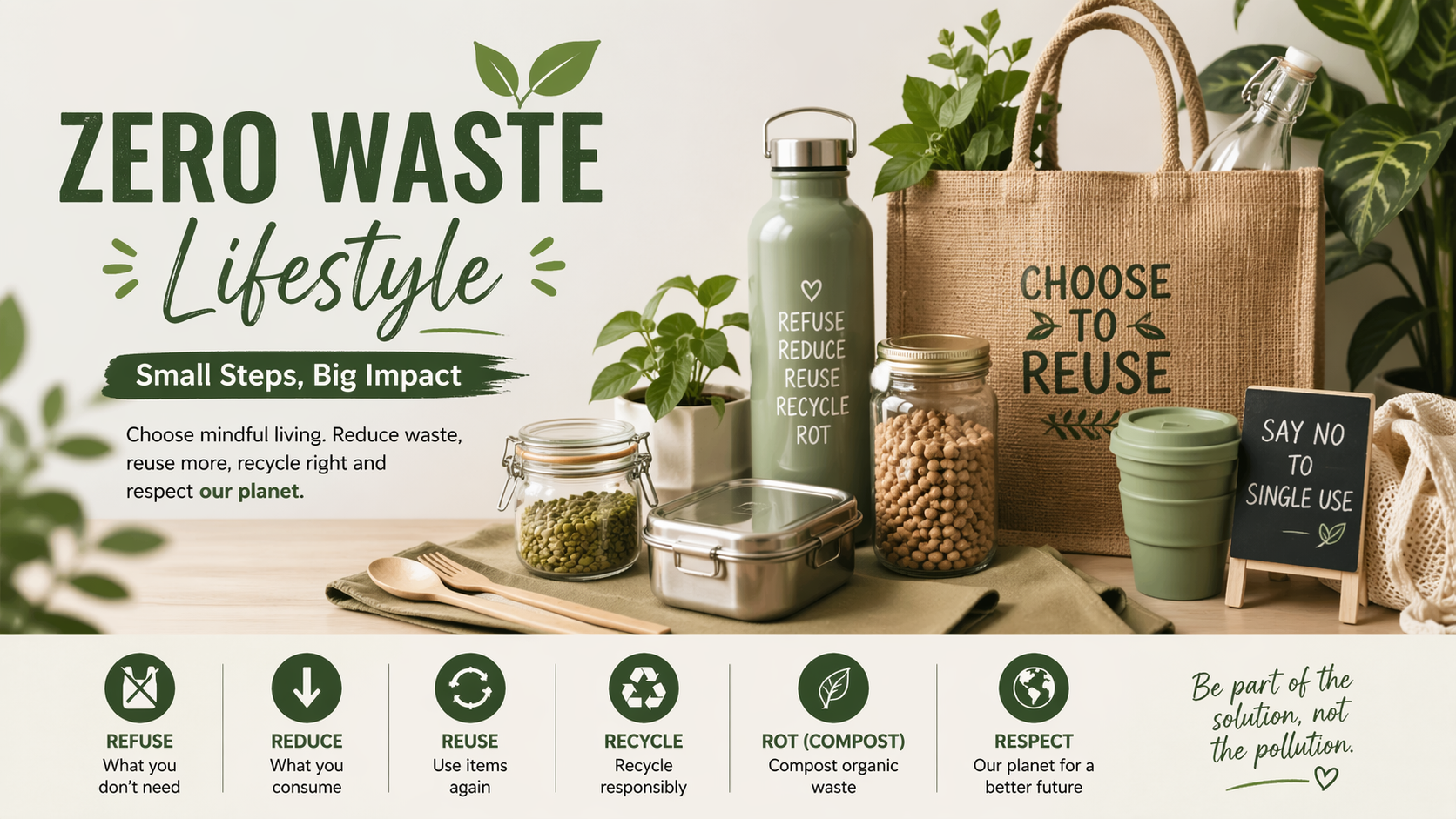
In today’s world, environmental sustainability has become one of the most pressing issues. A Zero Waste Lifestyle is a powerful approach that aims to minimize waste, conserve resources, and reduce environmental pollution. It’s not just a trend but a way of life that can help individuals contribute to a healthier planet. This article provides practical tips for living a zero-waste life and how you can incorporate it into your everyday routine for a more sustainable future.
What is a Zero Waste Lifestyle?
A Zero Waste Lifestyle refers to the practice of reducing the amount of waste you produce to as close to zero as possible. The goal is not to send anything to a landfill, incinerator, or the ocean. Instead, it’s about making mindful decisions to reuse, recycle, and compost everything in a way that ensures the least amount of waste is generated.
The concept is not limited to just recycling or avoiding plastic. It encompasses a holistic approach to how we consume, how we discard, and how we support the environment. Individuals who follow a zero-waste lifestyle often aim to reduce their waste at each stage of their consumption cycle—by refusing unnecessary items, reducing what they use, reusing what they can, recycling responsibly, and composting organic waste.
The Principles of Zero Waste Living
There are five key principles that form the foundation of the zero-waste movement: Refuse, Reduce, Reuse, Recycle, and Rot. These principles can be applied at different levels, from personal choices to community and even industrial practices. Here’s how each of them works:
1. Refuse Unnecessary Items
This principle involves saying no to things that you don’t need or that will end up as waste. It’s about avoiding single-use plastics, excess packaging, and promotional items that you won’t use.
2. Reduce Consumption
Reducing consumption focuses on buying less. This can mean buying fewer products overall, choosing higher-quality items that last longer, or opting for products with minimal packaging.
3. Reuse What You Can
Reusing is all about finding ways to repurpose items rather than throwing them away. Whether it’s using glass jars for storage or turning old clothes into rags, reusing items helps prevent waste from piling up.
4. Recycle Responsibly
While recycling is an important aspect of zero waste, it should only come after the first three principles. The goal is to recycle only what can truly be recycled and avoid contamination of recyclable materials by cleaning them and sorting them properly.
5. Rot (Composting)
Finally, composting organic waste like food scraps and yard waste allows for natural decomposition, turning waste into valuable compost that can enrich the soil.
Practical Tips for Starting a Zero Waste Lifestyle
Switching to a zero-waste lifestyle may seem overwhelming at first, but it can be achieved step by step. Below are some practical tips that can help you get started:
1. Start with Waste Audits
Before making changes, it’s helpful to understand how much waste you’re generating. Perform a waste audit by tracking what you throw away for a week. This will give you insight into areas where you can improve and reduce waste. You may be surprised to see how much disposable packaging you end up with or how much food goes to waste.
2. Ditch Single-Use Plastics
One of the most visible and harmful sources of waste is plastic. Switch from plastic bottles to reusable glass or stainless steel bottles, use cloth bags instead of plastic, and opt for metal straws instead of plastic ones. Small changes like these add up over time and significantly reduce your plastic consumption.
3. Choose Eco-Friendly Alternatives
There are eco-friendly alternatives for nearly every disposable product you use. For instance, swap paper towels for reusable cloth towels, use beeswax wraps instead of plastic wrap, and choose bar soap instead of liquid soap in plastic bottles. By making these substitutions, you’ll reduce your dependence on single-use plastics.
4. Invest in Durable, High-Quality Items
When shopping for household products, clothing, or appliances, opt for high-quality items that last longer. While they may have a higher upfront cost, these products will save you money in the long run and reduce the need for replacements.
5. Adopt a Minimalist Approach
A significant part of the zero-waste lifestyle involves being mindful of what you purchase. A minimalist mindset encourages people to buy only what is necessary and to focus on experiences rather than material possessions. By curbing impulse buying, you can help reduce the waste generated by consumerism.
Zero Waste in the Kitchen
The kitchen is one of the most waste-producing areas of the home, but it’s also one of the easiest places to implement zero-waste practices. Here are some tips for reducing waste in the kitchen:
1. Reduce Food Waste
Plan your meals ahead of time to avoid overbuying and wasting food. Store food properly to extend its shelf life, and if possible, purchase only what you can consume. Composting food scraps can also significantly reduce the amount of waste that ends up in landfills.
2. Use Reusable Containers and Bags
Instead of purchasing plastic bags or containers, use reusable ones. Glass jars, stainless steel containers, and cloth bags are excellent alternatives for storing food. You can also buy bulk items like grains, nuts, and spices using your own containers.
3. Buy Locally and Seasonally
Buying local produce not only supports your local economy but also helps reduce the carbon footprint associated with transporting goods across long distances. Seasonal produce often has a smaller environmental impact and can be used in a variety of dishes.
Zero Waste for Personal Care and Hygiene
Personal care products often come in excessive packaging, and many of them contain harmful chemicals. Here’s how to reduce waste in your personal care routine:
1. Choose Solid Hygiene Products
Opt for solid bar soap instead of liquid soap in plastic bottles. Solid shampoo bars, conditioner bars, and deodorants packaged in paper or metal containers are good alternatives to traditional products.
2. Use Refillable Containers
Instead of buying new bottles of shampoo or lotion, consider using refillable containers. Many stores now offer refill stations where you can bring your own containers to fill up with your favorite products.
3. Make Your Own Personal Care Products
Many zero-waste enthusiasts create their own personal care products, such as toothpaste, deodorant, and face scrubs, using simple, natural ingredients. This reduces packaging waste and ensures that you know exactly what’s in your products.
Zero Waste Clothing and Fashion
The fashion industry is one of the most polluting industries globally. However, there are ways to make your wardrobe more sustainable:
1. Buy Secondhand Clothing
Rather than buying new clothes, explore secondhand stores, thrift shops, or online resale platforms. This extends the lifespan of clothing and reduces the demand for new items, which in turn reduces textile waste.
2. Invest in Timeless, Quality Pieces
When buying new clothes, choose timeless, high-quality items that can last for years. Avoid fast fashion, which often uses cheap materials and is designed to be thrown away after a few uses.
3. Repair and Upcycle
Instead of discarding clothes with small tears or holes, learn how to repair them or repurpose them into something new. Upcycling allows you to give old clothes a second life, reducing textile waste.
Zero Waste at Work
Living a zero-waste lifestyle doesn’t just have to apply at home—it can also be integrated into your professional life. Here are some ways to practice zero waste at work:
1. Go Paperless
Eliminate the use of paper wherever possible. Opt for digital files, sign documents electronically, and use online calendars and task management tools. This reduces paper waste and also saves time and money.
2. Bring Your Own Lunch
Instead of ordering takeout that often comes with plastic containers and utensils, bring your own lunch in reusable containers. This minimizes packaging waste and ensures that you have healthier options available to you.
3. Reduce Energy Consumption
Implement energy-saving practices such as turning off lights when not in use, using energy-efficient appliances, and reducing the use of air conditioning or heating. These actions not only help reduce waste but also contribute to lower carbon emissions.
Overcoming Challenges in Adopting a Zero Waste Lifestyle
While the zero-waste lifestyle is beneficial for the environment, it’s not always easy to implement. There are several challenges people face when adopting this lifestyle, including:
1. Overcoming Convenience
Many zero-waste alternatives require more planning and effort. Convenience often drives us to make wasteful choices, but by making small adjustments to routines, we can overcome this barrier.
2. Finding Sustainable Alternatives
In some areas, it may be difficult to find sustainable products, especially if you live in a region where zero-waste options are limited. In these cases, it’s important to research alternatives and support businesses that prioritize sustainability.
3. Cost Considerations
Some zero-waste products have a higher upfront cost, but they often save money in the long term by being reusable and durable. Prioritize quality over quantity to ensure that you’re making a cost-effective investment in the future.
The Impact of a Zero Waste Lifestyle on the Environment
By following a zero-waste lifestyle, you can significantly reduce your environmental footprint. Here’s how:
1. Reduces Landfill Waste
By reusing, recycling, and composting, you can prevent waste from ending up in landfills, which helps reduce the environmental impact of landfill sites.
2. Lowers Carbon Footprint
When you buy fewer products and reduce packaging waste, you help reduce the demand for manufacturing, transportation, and disposal—three major contributors to carbon emissions.
3. Promotes Resource Conservation
Zero waste encourages the conservation of resources such as water, energy, and raw materials, helping to preserve the environment for future generations.
Conclusion: A Step Toward a Sustainable Future
Living a Zero Waste Lifestyle may seem daunting, but it’s a powerful step towards reducing environmental impact and promoting sustainability. By following the practical tips and embracing the principles of zero waste, you can significantly reduce waste, conserve resources, and help protect the planet. Start small, stay consistent, and remember that every small effort counts toward making a bigger impact. Together, we can create a more sustainable future.