

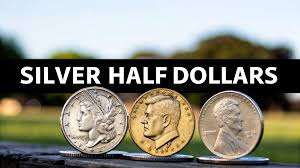
Silver half dollars have long been among the most admired and widely collected coins in American numismatic history. Combining historical significance, precious metal content, artistic beauty, and investment potential, these fifty-cent coins continue to attract collectors, investors, historians, and treasure hunters alike. Whether you have inherited an old coin collection, discovered a few half dollars tucked away in a drawer, or are considering building a collection from scratch, understanding silver half dollars is essential before buying or selling them.
Unlike modern clad coins, older silver half dollars contain real precious metal, making them valuable beyond their face value. However, the actual worth of a coin depends on several factors, including its date, mint mark, rarity, condition, historical importance, and silver content. Some silver half dollars are worth only slightly above their melt value, while others have sold for thousands—or even hundreds of thousands—of dollars at auction.
This comprehensive guide explores everything you need to know about silver half dollars in 2026. From their fascinating history and major coin series to grading, valuation, collecting strategies, investment considerations, storage methods, and common mistakes to avoid, this article provides practical information for beginners and experienced collectors alike.
The History of Silver Half Dollars in the United States
Silver half dollars have been an important part of American currency since the late eighteenth century. The Coinage Act of 1792 established the U.S. Mint and authorized the production of several denominations, including the half dollar. Since then, numerous designs have appeared, each reflecting the artistic style, political climate, and cultural values of its era.
The earliest silver half dollars were produced in the 1790s and remain among the rarest American coins today. Throughout the nineteenth century, designs evolved from Draped Bust and Capped Bust varieties to Seated Liberty coins. These coins witnessed significant periods of American history, including westward expansion, the Civil War, industrialization, and economic transformation.
The twentieth century introduced several iconic designs that remain highly popular among collectors. The Barber Half Dollar debuted in 1892, followed by the celebrated Walking Liberty Half Dollar in 1916. In 1948, the Franklin Half Dollar honored one of America’s Founding Fathers, Benjamin Franklin. After President John F. Kennedy’s assassination in 1963, the Kennedy Half Dollar was introduced in 1964 and quickly became one of the nation’s most recognized commemorative circulating coins.
The composition of silver half dollars also changed over time. Coins minted through 1964 contained 90% silver and 10% copper. Beginning in 1965, the silver content was reduced to 40% as rising silver prices made it increasingly expensive to produce circulating silver coins. By 1971, regular circulation half dollars transitioned entirely to copper-nickel clad composition, ending the era of circulating silver half dollars.
Although modern commemorative issues occasionally include silver versions, most collectible silver half dollars today were minted before 1971.
Understanding the Different Types of Silver Half Dollars
Collectors often divide silver half dollars into several major design series. Each offers unique historical appeal, varying levels of rarity, and different price ranges.
The Draped Bust Half Dollar (1796–1807) represents one of the earliest American coin series. Due to their age and limited mintages, these coins are exceptionally scarce and typically command high premiums.
The Capped Bust Half Dollar, minted from 1807 through 1839, introduced a more refined artistic style while maintaining substantial silver content. Many collectors appreciate this series for its historical connection to early America.
Seated Liberty Half Dollars were produced from 1839 through 1891. This long-running series includes numerous date and mint mark combinations, making it especially appealing to advanced collectors seeking complete collections.
The Barber Half Dollar (1892–1915), designed by Charles E. Barber, features Lady Liberty wearing a classical cap. While many common dates remain affordable, certain issues are considered key rarities.
Walking Liberty Half Dollars (1916–1947) are widely regarded as among the most beautiful American coins ever produced. Designed by Adolph A. Weinman, the obverse portrays Liberty striding toward the rising sun, symbolizing hope and freedom. The reverse features a majestic eagle perched on a mountain ledge.
Franklin Half Dollars (1948–1963) display Benjamin Franklin on the obverse and the Liberty Bell on the reverse. Because every Franklin Half Dollar contains 90% silver, they remain highly desirable among both collectors and silver investors.
The Kennedy Half Dollar debuted in 1964 with a 90% silver composition. Coins minted from 1965 through 1970 contain 40% silver. These early Kennedy issues remain among the most collected silver half dollars because of their historical significance and widespread availability.
Understanding these series helps collectors determine which coins best fit their budget, collecting goals, and personal interests.
Silver Content and Intrinsic Value of Silver Half Dollars
One of the primary reasons silver half dollars remain popular is their precious metal content. Even heavily circulated examples possess intrinsic value based on the amount of silver they contain.
Half dollars minted before 1965 generally contain 90% silver and 10% copper. Each coin contains approximately 0.3617 troy ounces of pure silver. As silver prices fluctuate, so does the minimum value of these coins. Collectors often refer to this as the coin’s melt value.
Half dollars produced between 1965 and 1970 contain 40% silver. Although these coins have less silver than earlier issues, they still contain a meaningful amount of precious metal and remain attractive to investors seeking lower-cost silver coins.
The intrinsic value creates a price floor that often protects silver half dollars from becoming nearly worthless. Even common-date coins in worn condition usually trade above face value because of their silver content.
However, intrinsic value represents only one component of a coin’s total worth. Numismatic premiums can substantially exceed melt value when a coin possesses exceptional rarity, outstanding condition, low mintage, strong collector demand, or historical importance.
Understanding both bullion value and collectible value allows buyers and sellers to make informed decisions in changing precious metal markets.
Factors That Determine the Value of Silver Half Dollars
The value of silver half dollars depends on a combination of market forces rather than a single characteristic. While silver content provides a baseline value, several additional factors significantly influence prices.
Date is one of the most important considerations. Certain years had much lower production numbers, making surviving examples considerably scarcer.
Mint marks also matter. Coins produced at Philadelphia, Denver, San Francisco, Carson City, and New Orleans can have dramatically different values even within the same year.
Condition, commonly called grade, plays a crucial role. A heavily worn coin may be worth only its silver content, while an uncirculated example of the same date could be worth many times more. Professional grading services use standardized scales to evaluate preservation, strike quality, surface condition, and eye appeal.
Rarity extends beyond original mintage. Some coins experienced extensive circulation or melting, reducing surviving populations. As a result, coins with relatively high original mintages may still become difficult to locate in higher grades.
Collector demand continually changes. Popular designs such as Walking Liberty and early Kennedy Half Dollars often enjoy consistent demand, supporting stronger prices over time.
Historical significance can also influence values. Coins associated with important historical events or transitional periods frequently attract additional collector interest.
Finally, certification by respected grading companies increases buyer confidence by verifying authenticity and assigning standardized grades. Certified examples generally command stronger prices than uncertified coins of similar quality.
How to Identify Valuable Silver Half Dollars
Identifying valuable silver half dollars requires careful observation and attention to detail. Beginners should start by examining the date and mint mark since these provide the foundation for evaluating rarity.
Mint marks are typically located on the reverse of older series or near the portrait on certain later designs. Learning their locations for each coin series is an essential skill for collectors.
Next, inspect the overall condition. Coins retaining original mint luster, sharp details, and minimal wear generally receive higher grades and higher values.
Collectors should also examine coins for varieties and minting errors. Double dies, repunched mint marks, off-center strikes, clipped planchets, and other mint errors can substantially increase a coin’s value.
Certain key dates deserve particular attention because they consistently command premiums. Low-mintage issues from the Walking Liberty, Barber, Franklin, and Kennedy series often receive heightened interest from collectors seeking complete sets.
Cleaning is another important consideration. Many beginners mistakenly polish old coins in hopes of increasing value. In reality, improper cleaning frequently damages original surfaces and reduces collector appeal. Experienced numismatists generally recommend leaving coins in their original condition.
Whenever uncertainty exists regarding authenticity or value, professional evaluation from a reputable coin dealer or grading service can provide valuable guidance.
Collecting Silver Half Dollars: Strategies for Beginners and Experienced Collectors
Silver half dollars offer numerous collecting opportunities suitable for every budget and experience level. Some collectors focus on completing entire design series, while others specialize in rare dates, mint marks, or high-grade examples.
Beginning collectors often start with circulated Franklin or Kennedy silver half dollars because they remain relatively affordable while still containing significant silver.
A date set represents another popular approach. This strategy requires obtaining one example from each production year without emphasizing mint marks. Date sets provide historical variety while remaining manageable in both cost and complexity.
Intermediate collectors frequently pursue date-and-mint collections, adding examples from every mint facility for each production year. Although more challenging, these collections offer greater satisfaction and educational value.
Advanced numismatists often specialize in certified high-grade coins, proof issues, mint errors, die varieties, or historically important rarities. Such collections may require years of research and substantial financial investment.
Some collectors prioritize eye appeal over numerical grade, selecting coins with attractive toning, original surfaces, and pleasing overall appearance.
Keeping detailed records of purchases, values, certifications, and storage locations helps maintain an organized collection while simplifying insurance documentation and future resale.
Joining local coin clubs, attending coin shows, reading numismatic publications, and participating in educational seminars also enhances collecting knowledge and provides opportunities to connect with experienced enthusiasts.
Investing in Silver Half Dollars in 2026: Opportunities and Risks
Silver half dollars occupy an interesting position between bullion investing and traditional coin collecting. Their precious metal content offers exposure to silver prices, while their collectible appeal creates opportunities for additional appreciation.
Many investors appreciate 90% silver half dollars because they combine recognizable government-issued coinage with established precious metal content. These coins are often easier to trade than privately minted silver rounds due to widespread familiarity.
Rare collectible examples may outperform bullion during periods of strong numismatic demand. High-grade certified coins with low populations often attract competitive bidding from advanced collectors regardless of short-term silver price fluctuations.
However, investing in collectible coins also involves risks. Market demand changes over time, grading standards evolve, counterfeit technology continues improving, and liquidity varies depending on rarity and condition.
Diversification remains important. Rather than concentrating exclusively on a single date or series, many investors build balanced collections containing common silver coins for bullion exposure alongside selected numismatic pieces with long-term appreciation potential.
Knowledge also serves as an investment advantage. Buyers who understand grading, authenticity, rarity, and market pricing are generally better positioned to recognize attractive purchasing opportunities and avoid overpriced coins.
While silver half dollars may complement a diversified investment portfolio, they should be approached with realistic expectations and long-term planning rather than short-term speculation.
Proper Storage, Authentication, and Preservation of Silver Half Dollars
Protecting silver half dollars is essential for preserving both their appearance and value. Improper handling can introduce scratches, fingerprints, corrosion, and environmental damage that permanently reduce collector interest.
Coins should be handled by their edges whenever possible. Oils and acids naturally present on human skin may stain or discolor silver surfaces over time.
Individual coin holders, archival-quality flips, hard plastic capsules, and certified slabs provide excellent protection against physical damage. Albums specifically designed for half dollars also allow collectors to organize sets while minimizing handling.
Environmental conditions matter as well. Coins should be stored in cool, dry locations with stable humidity levels. Excessive moisture accelerates tarnishing and corrosion, while extreme temperature fluctuations may damage storage materials.
Avoid storing silver coins in PVC-containing plastic holders because chemical reactions can produce sticky green residue that permanently harms coin surfaces.
Authentication has become increasingly important as counterfeit technology improves. Purchasing certified coins from reputable dealers reduces the risk of acquiring altered or counterfeit specimens. Professional grading services employ advanced equipment and experienced experts to verify authenticity before encapsulating coins.
Maintaining photographs, receipts, grading certificates, and inventory records also benefits collectors by supporting insurance claims, simplifying estate planning, and documenting ownership history.
Common Mistakes to Avoid When Buying or Selling Silver Half Dollars
Many new collectors make avoidable mistakes that reduce profits or diminish the long-term value of their collections. Understanding these pitfalls helps buyers and sellers make better decisions.
One of the most common errors is assuming every silver half dollar is extremely rare. While many older coins possess collectible value, millions of common-date examples remain available. Careful research is necessary before expecting extraordinary prices.
Another frequent mistake involves cleaning coins. Bright, polished surfaces may appear attractive to beginners, but experienced collectors usually prefer original, untouched coins. Cleaning often removes natural toning and microscopic surface characteristics that contribute to authenticity and desirability.
Ignoring grading standards also leads to costly purchasing decisions. Small differences in condition can translate into substantial price differences. Learning basic grading principles significantly improves buying confidence.
Purchasing from unknown or unreliable sources increases the risk of acquiring counterfeit or altered coins. Reputable dealers with established reputations generally provide greater security and more accurate pricing.
Some sellers also focus exclusively on silver content while overlooking numismatic premiums. Rare dates, exceptional grades, and important varieties may be worth many times their bullion value.
Finally, emotional buying without research can result in overpaying. Comparing recent market prices, studying auction results, and consulting reliable price guides help establish realistic expectations before completing transactions.
Conclusion
Silver half dollars remain one of the most rewarding areas of American coin collecting because they successfully combine history, artistry, precious metal value, and long-term collector demand. From the earliest Draped Bust issues to the beloved Walking Liberty, Franklin, and Kennedy series, these coins tell the story of the United States while offering tangible connections to generations of American commerce and culture.
Their value extends beyond silver content alone. Rarity, condition, historical significance, mint marks, collector demand, and professional certification all contribute to determining market prices. As a result, every silver half dollar deserves careful evaluation before being bought, sold, or added to a collection.
For beginners, silver half dollars provide an accessible entry into numismatics through affordable common-date examples. For experienced collectors, the pursuit of rare varieties, key dates, and high-grade certified specimens offers endless opportunities for learning and discovery. Investors likewise appreciate these coins for their blend of intrinsic bullion value and potential numismatic appreciation.
As interest in precious metals and historical collectibles continues into 2026, silver half dollars remain an enduring favorite among collectors worldwide. By understanding their history, recognizing the factors that influence value, practicing proper storage, and making informed purchasing decisions, collectors can build meaningful collections that preserve an important part of America’s monetary heritage while offering enjoyment for years to come.