

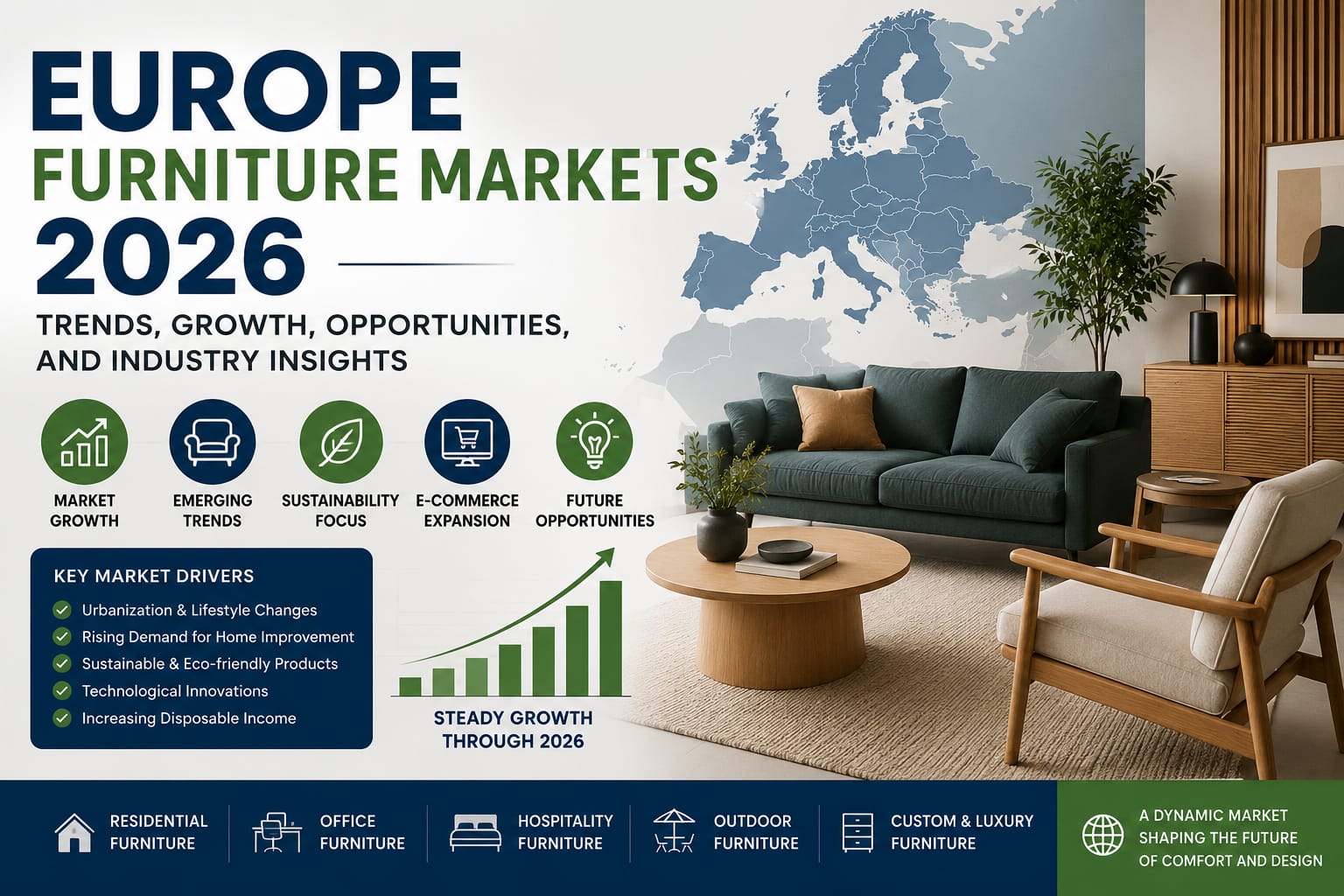
The European furniture industry stands among the most influential and innovative sectors in the global economy. Known for its world-class craftsmanship, cutting-edge design philosophies, and commitment to sustainability, Europe continues to shape furniture trends across the world. From luxury Italian furnishings and Scandinavian minimalism to German engineering and Polish manufacturing excellence, the continent remains a powerhouse in furniture production and exports.
As we move through 2026, the Europe furniture markets are experiencing significant transformation. Consumer preferences are evolving rapidly, digital technologies are reshaping retail experiences, sustainability has become a business necessity, and economic conditions continue to influence purchasing behavior. These factors are creating new opportunities while also presenting challenges for manufacturers, retailers, investors, and designers.
The furniture industry is no longer limited to producing tables, chairs, and cabinets. Today’s consumers seek products that combine functionality, comfort, aesthetics, environmental responsibility, and smart technology. Businesses that understand these changing demands are better positioned to succeed in an increasingly competitive marketplace.
This comprehensive guide explores the latest trends, growth drivers, opportunities, challenges, and future outlook of the Europe furniture markets in 2026.
Understanding the Europe Furniture Markets
The Europe furniture markets encompass a vast network of manufacturers, suppliers, retailers, designers, and exporters operating across the continent. Europe has historically been recognized as a global leader in furniture design and production, with numerous countries contributing unique strengths to the industry.
The market includes several key segments such as residential furniture, office furniture, hospitality furniture, educational furniture, healthcare furniture, and outdoor furniture. Each segment serves specific customer needs while contributing to the industry’s overall growth.
Residential furniture remains the largest category, driven by increasing homeownership, renovation activities, and consumer interest in interior design. Meanwhile, office furniture continues evolving as businesses adapt to hybrid work models and prioritize employee well-being through ergonomic solutions.
Europe’s furniture industry benefits from strong manufacturing infrastructure, skilled labor, advanced technology, and a reputation for quality. These advantages help European companies maintain a competitive edge in both domestic and international markets.
Major Trends Shaping Europe Furniture Markets in 2026
Several emerging trends are redefining the Europe furniture markets in 2026. One of the most influential trends is the growing demand for multifunctional furniture. Urban living spaces are becoming smaller in many European cities, encouraging consumers to purchase furniture that serves multiple purposes.
Another major trend is personalization. Modern buyers want furniture that reflects their unique tastes and lifestyles. Manufacturers are responding by offering customizable materials, colors, finishes, and configurations.
Minimalist aesthetics continue to dominate many European markets. Clean lines, neutral color palettes, and practical designs remain highly attractive to consumers seeking modern and timeless interiors.
Technology integration is also becoming more common. Smart desks, wireless charging furniture, adjustable workstations, and connected home furnishings are gaining popularity among younger consumers and professionals.
These trends demonstrate how the furniture industry is adapting to changing lifestyles and evolving consumer expectations.
Growth Drivers Behind the Industry’s Expansion
The growth of Europe furniture markets is supported by several powerful economic and social factors. One significant driver is the increasing focus on home improvement and renovation projects. Homeowners are investing more in upgrading their living spaces, leading to higher demand for premium furniture products.
Population growth in urban centers is another important factor. As cities expand and housing developments increase, furniture purchases naturally follow. New homeowners and renters contribute significantly to market demand.
The rise of remote and hybrid work has created strong demand for home office furniture. Consumers now seek ergonomic chairs, adjustable desks, storage solutions, and workspaces that promote productivity and comfort.
Digital retail channels have further accelerated market growth by making furniture shopping more convenient. Consumers can compare products, read reviews, visualize furniture in their homes, and complete purchases online.
Additionally, growing disposable incomes in several European countries continue supporting furniture spending, particularly within premium and luxury market segments.
Sustainability as a Core Industry Focus
Sustainability has become one of the defining characteristics of Europe furniture markets. Consumers are increasingly aware of environmental issues and prefer products that align with their values.
Furniture manufacturers across Europe are investing heavily in sustainable practices. This includes sourcing certified wood, utilizing recycled materials, reducing carbon emissions, and implementing eco-friendly production methods.
Many companies are adopting circular economy principles that emphasize reuse, repair, refurbishment, and recycling. Instead of producing disposable products, manufacturers are focusing on durability and long-term value.
Sustainable packaging solutions are also becoming standard practice throughout the industry. Businesses are reducing plastic usage and exploring biodegradable alternatives.
Environmental regulations across Europe continue encouraging greener production methods. Companies that prioritize sustainability not only meet regulatory requirements but also strengthen their appeal among environmentally conscious consumers.
The Impact of E-Commerce on Furniture Sales
The rapid growth of e-commerce has fundamentally changed how furniture is bought and sold throughout Europe. Online shopping has become a preferred purchasing method for many consumers due to convenience, accessibility, and product variety.
Furniture retailers have invested significantly in digital platforms that offer immersive shopping experiences. Features such as augmented reality, virtual room planners, and 3D product visualization allow customers to evaluate products before purchasing.
The rise of direct-to-consumer business models has enabled manufacturers to connect directly with buyers while reducing dependency on traditional retail channels.
Omnichannel strategies have also gained momentum. Consumers may research products online, visit physical showrooms for verification, and complete purchases through digital channels.
As technology continues advancing, e-commerce is expected to account for an even larger share of furniture sales across Europe, creating new opportunities for businesses that embrace digital innovation.
Leading Countries in Europe Furniture Markets
Several countries dominate the Europe furniture markets due to their manufacturing capabilities, design expertise, and export strength.
Italy remains one of the world’s most prestigious furniture producers. Italian brands are synonymous with luxury, craftsmanship, and innovative design. The country’s furniture sector continues influencing global trends and attracting high-end consumers.
Germany is known for quality engineering and durable furniture solutions. German manufacturers focus heavily on precision, functionality, and advanced production technologies.
Poland has become one of Europe’s largest furniture exporters. Competitive production costs, skilled workers, and modern manufacturing facilities have helped Poland establish a strong international presence.
Sweden plays a vital role through its globally recognized Scandinavian design philosophy. Simplicity, functionality, and sustainability characterize many Swedish furniture products.
France and Spain also contribute significantly through creative design innovation, growing domestic demand, and strong export activities. Together, these countries form the backbone of the European furniture industry.
Consumer Behavior and Purchasing Preferences
Understanding consumer behavior is essential for companies operating within the Europe furniture markets. Today’s consumers are more informed and selective than ever before.
Quality remains a primary consideration when purchasing furniture. Buyers expect products that offer durability, comfort, and long-term value. However, aesthetics and functionality are equally important.
Many consumers prefer furniture that adapts to changing lifestyles. Modular sofas, expandable dining tables, storage beds, and multifunctional furniture solutions continue gaining popularity.
Health-conscious buyers are increasingly interested in ergonomic furniture. The growth of remote work has further accelerated demand for products that support posture, comfort, and productivity.
Consumers are also paying closer attention to brand values. Sustainability, ethical sourcing, and transparency often influence purchasing decisions alongside price and design considerations.
These changing preferences are encouraging furniture companies to innovate continuously and develop products that address evolving customer needs.
Opportunities for Businesses and Investors
The Europe furniture markets offer substantial opportunities for businesses, entrepreneurs, and investors seeking long-term growth.
One promising area is sustainable furniture manufacturing. Companies specializing in environmentally friendly products are well-positioned to benefit from rising consumer awareness and regulatory support.
The expansion of online retail presents opportunities for e-commerce platforms, logistics providers, and digital technology companies serving the furniture industry.
Smart furniture represents another rapidly growing segment. Products that integrate technology and connectivity features appeal to modern consumers and create opportunities for innovation.
Customization services also present significant growth potential. Businesses that offer personalized furniture solutions can differentiate themselves in competitive markets and build stronger customer relationships.
Investment opportunities extend beyond manufacturing to include design services, interior consulting, supply chain management, and furniture rental platforms.
Challenges Facing Europe Furniture Markets
Despite strong growth prospects, the Europe furniture markets face several challenges that require strategic responses.
Supply chain disruptions remain a concern. Fluctuations in raw material availability, transportation delays, and geopolitical uncertainties can impact production schedules and profitability.
Rising energy costs continue affecting manufacturing operations across Europe. Furniture producers must balance operational efficiency with maintaining product quality.
Labor shortages in certain regions create additional pressure. Skilled craftspeople, technicians, and production workers remain essential for maintaining Europe’s reputation for quality furniture.
Competition from low-cost imports presents ongoing challenges. European manufacturers often differentiate themselves through superior craftsmanship, innovative design, and sustainability commitments.
Economic uncertainty can also influence consumer spending patterns, particularly for high-ticket furniture purchases. Businesses must remain flexible and responsive to changing market conditions.
Future Outlook and Industry Forecast
The future of Europe furniture markets appears highly promising. Industry experts expect continued expansion driven by innovation, sustainability, and evolving consumer preferences.
Demand for environmentally responsible products is likely to increase as consumers become more conscious of environmental impacts. Furniture companies that invest in sustainable materials and production methods will gain significant competitive advantages.
Technological advancements will continue transforming manufacturing processes, improving efficiency, reducing waste, and enabling greater customization.
Urbanization trends are expected to support demand for space-saving and multifunctional furniture solutions. As living spaces become more compact, innovative designs will become increasingly important.
The integration of smart technology into furniture products is also expected to accelerate. Connected furniture solutions that enhance convenience and functionality will likely become mainstream over the coming years.
Overall, the European furniture industry remains well-positioned for growth, supported by strong design heritage, advanced manufacturing capabilities, and a commitment to innovation.
Conclusion
The Europe furniture markets continue to serve as a global benchmark for quality, innovation, sustainability, and design excellence. In 2026, the industry is benefiting from powerful growth drivers including urbanization, home improvement trends, digital transformation, and increasing demand for sustainable products.
Countries such as Italy, Germany, Poland, Sweden, France, and Spain remain key contributors to the market’s success, while technological innovation and changing consumer preferences create new opportunities for growth.
Although challenges such as supply chain disruptions, rising costs, and international competition persist, the industry’s long-term outlook remains positive. Companies that embrace sustainability, invest in digital capabilities, and prioritize customer needs will be best positioned to thrive in the evolving marketplace.
The future of Europe furniture markets is bright, offering exciting opportunities for businesses, investors, and consumers alike.
Frequently Asked Questions (FAQs)
- What are Europe furniture markets?
Europe furniture markets refer to the furniture manufacturing, distribution, retail, and export sectors operating across European countries.
- Which country leads the European furniture industry?
Italy, Germany, and Poland are among the leading countries due to their strong manufacturing capabilities, exports, and design expertise.
- Why is sustainability important in furniture markets?
Sustainability helps reduce environmental impact, meets consumer expectations, and supports compliance with European regulations.
- How is technology influencing furniture sales?
Technology enhances online shopping experiences, supports product customization, improves manufacturing efficiency, and enables smart furniture innovations.
- What opportunities exist in Europe furniture markets?
Key opportunities include sustainable furniture production, e-commerce expansion, smart furniture development, customization services, and digital retail solutions