

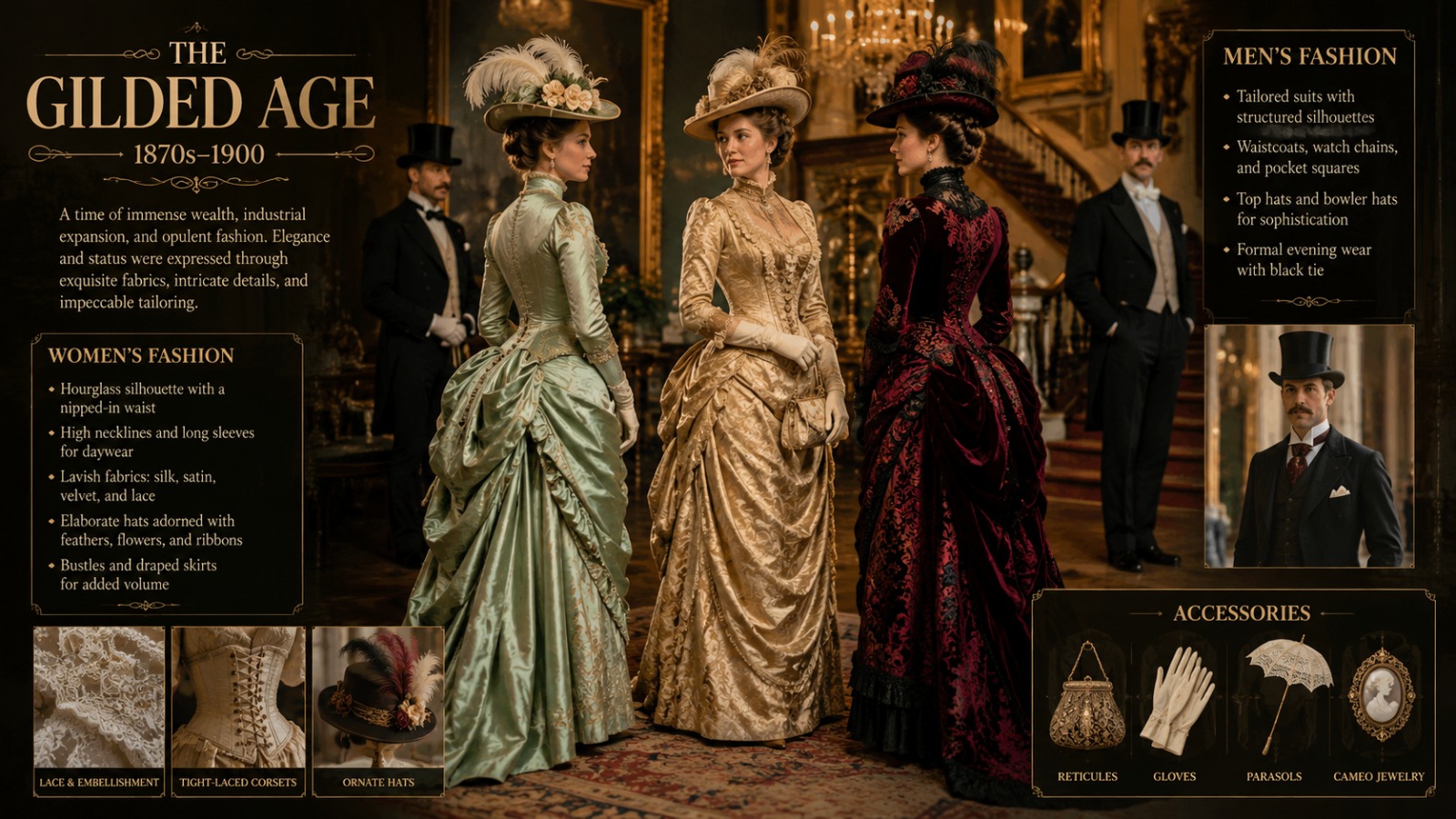
The Gilded Age, spanning from the 1870s to the early 1900s in the United States, was a period of rapid industrial growth, wealth accumulation, and social transformation. Amid this backdrop, Gilded Age fashion emerged as a vivid reflection of status, luxury, and sophistication. Fashion during this era was not just about clothing; it symbolized social position, refinement, and the pursuit of elegance. Women’s gowns, men’s suits, and elaborate accessories became visual markers of prestige, setting the tone for one of the most stylistically opulent periods in history. From the lavish ballrooms of New York to the social gatherings of Newport, Gilded Age fashion told a story of extravagance and careful attention to detail.
The Social Context Behind Gilded Age Fashion
The rise of Gilded Age fashion cannot be separated from the societal changes of the era. America experienced a surge in wealth due to industrialization, railroads, and financial empires. Families like the Vanderbilts, Carnegies, and Astors displayed their fortunes through extravagant parties and opulent homes. Fashion became a key instrument for demonstrating one’s social standing. Women’s attire, in particular, was heavily influenced by European styles, with Parisian couture leading the trends. The focus was on creating garments that not only displayed wealth but also showcased impeccable taste and refinement. Social etiquette dictated clothing choices, with different outfits for afternoon teas, evening dinners, and formal balls, making Gilded Age fashion a complex and highly structured reflection of societal expectations.
Women’s Fashion in the Gilded Age
Women’s clothing in the Gilded Age fashion era emphasized an hourglass figure, with tight corsets, structured bodices, and voluminous skirts. The silhouette was further enhanced by crinolines, bustles, and layers of petticoats. Fabrics were rich and luxurious, often featuring silk, velvet, and satin, adorned with lace, ribbons, and intricate embroidery. Evening gowns were heavily decorated with beading and fringe, designed to dazzle under candlelight. Daywear was slightly more subdued but still elegant, incorporating high collars, puffed sleeves, and elaborate hats. Every detail, from gloves to parasols, played a role in completing a woman’s outfit. Gilded Age fashion was more than attire—it was a display of sophistication and wealth.
The Role of Accessories in Gilded Age Fashion
Accessories were a crucial element of Gilded Age fashion, often making or breaking an outfit. Women wore extravagant jewelry, including diamond tiaras, pearl necklaces, and brooches, to signify status. Gloves, fans, and handbags were not mere functional items but essential style statements. Hats, often adorned with feathers, ribbons, and flowers, were a defining feature of daywear, while evening hats were smaller and more delicate. Men’s fashion was no less focused on details, with pocket watches, cufflinks, canes, and hats serving as markers of refinement. The emphasis on accessories highlighted the era’s obsession with luxury and the idea that no detail could be overlooked in the pursuit of social perfection.
Men’s Fashion During the Gilded Age
Although women’s fashion is often the focus of Gilded Age fashion, men’s attire was equally important in demonstrating social position. Men’s clothing was characterized by tailored suits, waistcoats, and formal jackets. The morning coat was common for daytime events, while evening dress included tailcoats and formal trousers. Shirts featured stiff collars, and cravats or ties were meticulously tied to maintain a polished appearance. Outerwear, including frock coats and overcoats, showcased both style and practicality. Men also paid close attention to grooming, with neatly trimmed beards and mustaches complementing their attire. Just as women used fashion to signal wealth and taste, men relied on sartorial choices to project power, status, and sophistication in social and professional settings.
Hairstyles and Makeup Trends
Hairstyles were another essential component of Gilded Age fashion. Women often wore elaborate updos, curls, and braids, sometimes incorporating hairpieces for additional volume. Hair was frequently adorned with ribbons, combs, or tiaras to match the outfit and the occasion. Subtle makeup began to gain popularity, emphasizing pale complexions, delicate lips, and defined eyes, reflecting the era’s emphasis on refinement rather than overt beauty. Men’s grooming trends focused on neatly styled hair and carefully maintained facial hair, complementing the tailored precision of their clothing. The coordination of hairstyle, makeup, and clothing reinforced the overall polished and elegant aesthetic characteristic of the era.
Influence of European Fashion
European influence, particularly from Paris, was pivotal in shaping Gilded Age fashion. Parisian designers like Charles Frederick Worth set the standard for haute couture, which American elites eagerly adopted. Importing European styles allowed American society to showcase cultural sophistication and alignment with global fashion trends. Patterns, fabrics, and silhouettes from Paris influenced evening gowns, coats, and accessories, making French fashion the gold standard for socialites. Women often traveled to Europe to purchase bespoke dresses or hire designers to create garments reflecting the latest trends. This transatlantic exchange reinforced the luxurious and cosmopolitan feel of Gilded Age fashion, blending European artistry with American opulence.
Children’s Fashion in the Gilded Age
Children were not excluded from the influence of Gilded Age fashion. Young girls wore miniature versions of adult gowns, complete with frills, lace, and sashes, while boys donned tailored suits or sailor outfits for formal occasions. The clothing reflected both social expectations and family status, ensuring that even the youngest members of elite society adhered to the standards of elegance. Children’s attire was often intricate, using high-quality fabrics and detailing, emphasizing the notion that status and refinement were cultivated from an early age. These practices illustrated how Gilded Age fashion permeated every aspect of society, from the youngest children to the most prominent adults.
Evening and Ball Attire
Evening wear was a highlight of Gilded Age fashion. Balls and formal dinners required gowns with full skirts, fitted bodices, and elaborate embellishments. Necklines and sleeves varied according to the occasion, with off-shoulder dresses becoming popular for high-society gatherings. Men’s formal attire for evening events included tailcoats, white waistcoats, and polished shoes, completing a look of sophistication. The coordination of attire with social events underscored the ritualistic aspect of fashion during the era, emphasizing not only style but social awareness and etiquette. The grandeur of evening attire became a defining characteristic of the Gilded Age, symbolizing the height of elegance and societal expectation.
Legacy of Gilded Age Fashion
The influence of Gilded Age fashion persists even today, inspiring designers, costume makers, and historians. Elements such as structured silhouettes, luxurious fabrics, and detailed embellishments continue to inform modern fashion. Films and period dramas often recreate the elaborate dresses, suits, and accessories of the era, introducing contemporary audiences to the opulence and refinement of the Gilded Age. Moreover, the period’s fashion ethos—attention to detail, emphasis on status, and pursuit of elegance—remains a reference point for luxury brands and haute couture houses. Understanding Gilded Age fashion provides insight not only into clothing trends but also into the social and cultural dynamics of a transformative period in American history.
Conclusion
In summary, Gilded Age fashion was a vivid reflection of wealth, status, and elegance. It encompassed women’s elaborate gowns, men’s tailored suits, intricate accessories, and carefully styled hair, all designed to project refinement and social standing. Influenced heavily by European trends, the fashion of this era reflected the aspirations, wealth, and sophistication of American society at the turn of the century. Studying Gilded Age fashion allows us to appreciate the artistry, cultural significance, and social rituals associated with clothing, offering a window into the lives of a generation that celebrated luxury and style as central to identity and social life.