

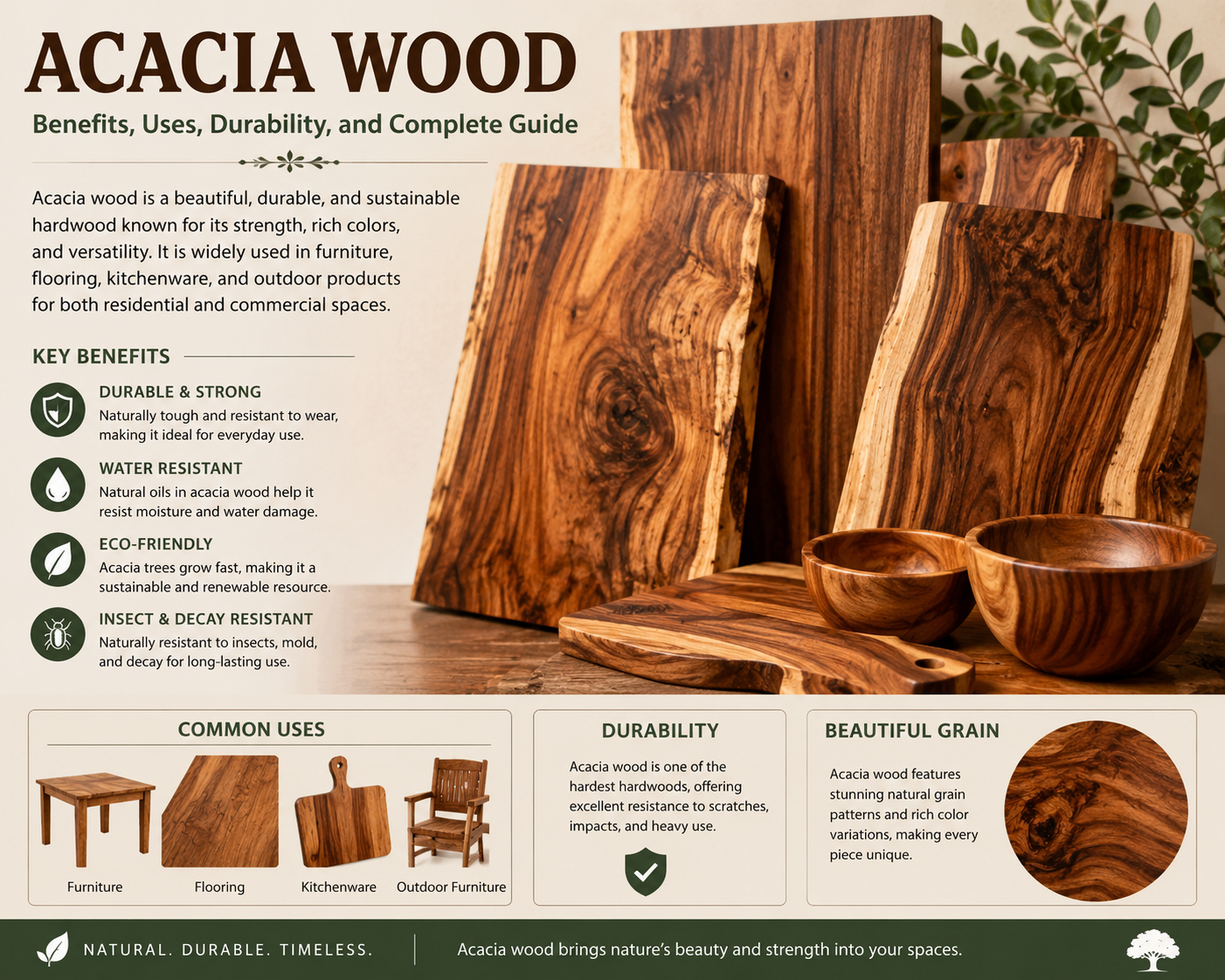
Wood has remained one of the most trusted materials in construction, furniture making, and home décor for centuries. Among the many hardwood options available today, acacia wood has become increasingly popular because of its durability, attractive grain patterns, and eco-friendly qualities. Whether used in dining tables, flooring, kitchen accessories, or outdoor furniture, this versatile hardwood continues to attract homeowners, designers, and manufacturers alike.
Many people are drawn to acacia because it combines strength with beauty. It offers natural resistance to wear and tear while maintaining a rich and elegant appearance. Since modern buyers are looking for materials that are sustainable and long-lasting, acacia has emerged as a practical alternative to several traditional hardwoods.
This complete guide explores everything you need to know about acacia wood, including its characteristics, benefits, common uses, durability, maintenance requirements, and factors to consider before buying products made from it.
What Is Acacia Wood?
Acacia wood comes from trees and shrubs belonging to the Acacia genus. These trees grow in various regions around the world, including Australia, Asia, Africa, and parts of the Americas. There are hundreds of species within the Acacia family, though only some varieties are harvested for woodworking and furniture production.
Acacia trees are known for their fast growth and adaptability. Depending on the species, they can thrive in dry environments, tropical climates, and harsh soil conditions. This adaptability contributes to the sustainability of acacia as a renewable resource.
The wood itself is classified as hardwood due to its density and strength. It often features distinctive grain patterns and rich colors ranging from light amber and golden tones to deep reddish-brown shades. These unique appearances make every piece visually different, giving furniture and décor items a natural character that many people appreciate.
One notable feature of acacia is that it often possesses natural oils, which help protect it from moisture and pests. This characteristic contributes significantly to its long lifespan.
Why Acacia Wood Has Become So Popular
Over recent years, homeowners and furniture manufacturers have shown growing interest in acacia wood. Its popularity is not based on appearance alone. Several practical benefits make it an appealing material for both indoor and outdoor applications.
Consumers today seek products that balance aesthetics, functionality, and sustainability. Acacia fulfills these requirements effectively. Unlike some hardwoods that take decades to mature, many acacia species grow relatively quickly. This growth rate makes harvesting more sustainable.
Additionally, manufacturers appreciate its workability. Although acacia is dense and strong, skilled craftsmen can shape and polish it into various forms. As a result, the material appears in countless furniture designs ranging from rustic farmhouse styles to sleek modern aesthetics.
Its resistance to moisture and everyday wear also increases its value for busy households. Families with children or pets often prefer furniture capable of withstanding heavy use.
As environmental awareness continues to influence purchasing behavior, acacia’s renewable nature further contributes to its rising demand.
Benefits of Acacia Wood
There are many reasons why buyers choose acacia over other hardwoods. Its combination of physical strength and visual appeal creates a highly desirable material.
One of the most significant advantages is durability. Acacia belongs among the tougher hardwood varieties, making it resistant to scratches, dents, and impact damage. Furniture constructed from this material can remain functional and attractive for many years.
Another major benefit involves appearance. The natural grain patterns create unique textures and color variations. Since no two pieces are identical, homeowners receive furniture with distinctive visual character.
Moisture resistance is another positive quality. Acacia naturally contains oils that repel water more effectively than some alternative woods. While it should not remain exposed to excessive moisture continuously, it performs well under normal environmental conditions.
Sustainability also stands out as an advantage. Fast-growing species replenish more quickly than slow-growing hardwoods. Responsible harvesting practices further support environmentally conscious purchasing decisions.
Acacia is additionally resistant to insects and fungal growth. These qualities reduce the likelihood of pest-related damage.
Heat resistance represents another practical benefit. Kitchen products such as cutting boards and serving trays frequently use acacia because it handles temperature fluctuations reasonably well.
Overall, the broad combination of durability, beauty, and practicality makes acacia attractive across numerous industries.
Physical Characteristics of Acacia Wood
Understanding the physical qualities of acacia wood helps explain its performance and popularity.
Acacia is considered one of the hardest hardwood species commonly available in furniture manufacturing. Its density contributes directly to its strength and longevity.
The grain structure often appears irregular or wavy, creating unique visual effects. Some pieces display smooth patterns while others contain dramatic swirls and contrasting textures.
Color variation represents another defining feature. Freshly cut acacia may appear lighter, gradually darkening as it ages. Shades commonly include:
- Golden honey tones
- Medium brown hues
- Deep reddish-brown colors
- Dark chocolate shades
Natural knots and markings may also appear throughout the surface. Rather than being viewed as imperfections, these characteristics often increase aesthetic appeal.
Acacia possesses a smooth finish after polishing. Craftsmen can stain or seal it if desired, although many people prefer showcasing its natural appearance.
Because of its density, the wood tends to be relatively heavy. This weight contributes to stability but may make moving large furniture more difficult.
These characteristics create products that look luxurious while remaining highly functional.
Common Uses of Acacia Wood
The versatility of acacia allows manufacturers to use it in numerous applications across homes and commercial spaces.
Furniture remains one of the largest markets for acacia products. Dining tables, coffee tables, bookshelves, cabinets, bed frames, and chairs frequently utilize this hardwood.
Its attractive appearance makes it ideal for statement pieces where grain patterns become visual focal points.
Flooring manufacturers also appreciate acacia because of its strength. Hardwood floors experience constant foot traffic, and acacia’s resistance to wear makes it suitable for active households.
Kitchen products commonly use acacia as well. Examples include:
- Cutting boards
- Serving platters
- Utensils
- Bowls
- Knife blocks
- Countertop accessories
Outdoor furniture represents another popular category. Since acacia handles moisture better than many woods, patio chairs and garden tables often incorporate it.
Decorative products additionally benefit from acacia’s appearance. Picture frames, wall shelves, sculptures, and handcrafted accessories frequently showcase its unique textures.
Boat building, cabinetry, and specialty woodworking projects also use acacia in certain regions.
Its versatility explains why demand continues expanding across industries.
How Durable Is Acacia Wood?
Durability often becomes one of the most important considerations before purchasing furniture or flooring materials.
Fortunately, acacia wood performs exceptionally well in this category.
Because of its density, acacia resists scratches better than softer woods such as pine or cedar. Heavy daily use generally causes less visible wear over time.
The material’s hardness also allows it to tolerate impact reasonably well. While no wood remains entirely immune to damage, acacia tends to maintain its structural integrity under normal use.
Natural water resistance contributes further protection. Minor spills generally do not cause immediate harm if cleaned promptly.
Outdoor furniture made from acacia can survive changing weather conditions better than many alternatives. However, extended exposure to rain, direct sunlight, or freezing temperatures can eventually affect any natural material.
Under proper care, indoor acacia furniture often lasts decades. Some high-quality pieces may remain functional for generations.
This long lifespan frequently offsets higher upfront costs by reducing replacement expenses.
For buyers prioritizing durability, acacia ranks among the stronger hardwood options available.
Acacia Wood vs Other Popular Hardwoods
Understanding how acacia compares with competing materials can simplify purchasing decisions.
Oak is one of the most recognized hardwoods. While oak offers excellent durability, acacia frequently displays more dramatic grain variations and warmer color tones.
Maple possesses a smoother appearance and lighter color. However, some buyers prefer acacia’s richer textures and visual depth.
Teak often dominates outdoor furniture discussions due to its exceptional moisture resistance. Although teak performs slightly better outdoors, it generally costs considerably more than acacia.
Walnut features luxurious dark coloration and elegant grain patterns. However, walnut furniture usually carries premium pricing beyond many budgets.
Pine remains cheaper and lighter than acacia but lacks comparable hardness and resistance to wear.
Compared with bamboo, acacia often feels more substantial and traditional while maintaining similar sustainability benefits.
Ultimately, choosing between hardwoods depends on personal preferences, intended use, and budget considerations.
Still, acacia consistently delivers strong overall performance across multiple categories.
Caring for and Maintaining Acacia Wood
Like any natural material, proper maintenance helps preserve appearance and lifespan.
Fortunately, maintaining acacia wood requires relatively simple routines.
Regular dusting prevents dirt accumulation. A soft microfiber cloth typically works well.
When cleaning surfaces, avoid harsh chemicals or abrasive cleaners. Mild soap diluted in warm water generally provides sufficient cleaning power.
Immediately wipe spills to prevent moisture absorption. Although acacia resists water better than many woods, prolonged exposure can eventually cause warping or discoloration.
Using coasters and placemats helps minimize scratches and heat damage.
Furniture positioned near windows may experience color changes due to prolonged sunlight exposure. Rotating items periodically can encourage more even aging.
Wood conditioners or specialized furniture oils may occasionally restore moisture balance and enhance appearance.
For outdoor products, protective covers during severe weather extend lifespan significantly.
Routine care does not require substantial effort yet can preserve furniture beauty for many years.
Potential Disadvantages of Acacia Wood
Although acacia offers numerous advantages, buyers should also understand possible limitations.
Weight represents one consideration. Since acacia is dense, furniture pieces can become heavy and difficult to move.
Natural color variations may surprise some consumers. While many appreciate unique grain patterns, individuals seeking perfectly uniform appearances may prefer engineered materials.
Direct sunlight can gradually alter coloration over time. Certain pieces may darken unevenly if exposed continuously.
Humidity fluctuations may additionally affect performance. Extremely dry or excessively humid environments occasionally contribute to minor expansion or contraction.
Price can vary depending on craftsmanship and species. Premium acacia furniture sometimes costs more than products made from lower-grade materials.
Lower-quality manufacturing processes may also influence durability. Not every item marketed as acacia offers identical quality standards.
Nevertheless, most drawbacks remain manageable through informed purchasing and regular care.
Is Acacia Wood a Sustainable Choice?
Environmental sustainability increasingly influences buying decisions, and many consumers want materials that minimize ecological impact.
Acacia generally performs well from a sustainability perspective.
Many species grow rapidly compared with traditional hardwood trees. Faster growth allows forests to replenish more efficiently after harvesting.
Additionally, acacia often grows in environments unsuitable for many crops, reducing pressure on agricultural land.
Responsible forestry practices further improve sustainability outcomes. Certification programs help ensure ethical harvesting methods and environmental stewardship.
Because acacia products often last many years, reduced replacement frequency additionally lowers environmental impact.
Durable furniture contributes less waste compared with disposable alternatives requiring frequent replacement.
Buyers interested in eco-conscious home design frequently appreciate acacia for these reasons.
Although sustainability ultimately depends on sourcing practices, responsibly harvested acacia can represent an environmentally friendly option.
Conclusion
Acacia wood has earned its reputation as a durable, attractive, and versatile hardwood suitable for a wide range of applications. From elegant dining tables and flooring to cutting boards and outdoor furniture, its unique blend of strength and natural beauty makes it a preferred material among homeowners and designers.
Its resistance to wear, moisture, and insects supports long-term durability, while rich grain patterns create visual appeal that enhances nearly any interior style. Sustainability advantages further strengthen its value in an era where consumers increasingly prioritize environmentally responsible choices.
Although factors such as weight, color variation, and maintenance should be considered, the benefits often outweigh potential drawbacks. With proper care, products made from acacia can deliver both function and beauty for decades.
For anyone seeking a hardwood that combines style, practicality, and longevity, acacia wood remains an excellent option worth considering.